 English
 中文简体
 Français
 русский
 Español
 عربى
Content
- 1 Lighting Capacitors Are Circuit Components, Not Accessories
- 2 Temperature Class Is the First Lock on HID and Metal Halide Designs
- 3 Lighting Compensation Capacitors: Class A and Class B Are Different Risk Profiles
- 4 Fit, Case Shape, and Thermal Path Decide the Final Part Number
- 5 Metallized Film and Self-Healing Behavior Set the Long-Term Drift
- 6 Supplier Checks Before You Approve a Lighting Capacitor Sample
- 7 Lighting Capacitor FAQ
Lighting Capacitors Are Circuit Components, Not Accessories
A lighting capacitor is a metallized film capacitor built for ballast, ignitor, power factor correction, or lamp compensation duty, and it must be selected by circuit function rather than by the capacitor label alone.
In HID and metal halide fixtures, the capacitor may sit near the lamp, the ballast, or the can cover. The same catalog family can appear in cylinder and oval aluminum cases, with 100 C or 110 C temperature markings, so two parts that look close in capacitance can behave very differently after a few thousand hours.
For a buying team, the practical question is not whether the part is called a lighting capacitor. It is whether the part matches the fixture thermal rise, mounting space, voltage stress, and expected service cycle. That is where most sourcing errors begin.
Temperature Class Is the First Lock on HID and Metal Halide Designs
Temperature class is the first specification to freeze, because a 100 C capacitor is not a drop-in replacement for a 110 C part in a sealed fixture.
Catalog lighting ranges commonly separate HID lamps at 110 C from metal halide lamps at 100 C. The difference is not cosmetic. A lamp can with poor airflow raises the capacitor internal hot spot, and a part approved for a lower case temperature may lose capacitance faster or fail earlier than the fixture test predicts.
| Application | Series shown in catalog | Temperature marking | Case format | Main check |
| HID lamp | CBB65 | 110 C | Cylinder, aluminum | Diameter and lead length |
| HID lamp | CBB66A | 110 C | Oval, aluminum | Oval clearance and bracket |
| Metal halide | CBB65 | 100 C | Cylinder, aluminum | Lamp ballast temperature |
| Metal halide | CBB66A | 100 C | Oval, aluminum | Can cover and wiring space |
When you compare samples, ask for the temperature marking on the case, the rated voltage, the capacitance tolerance, and the case dimensions on the same drawing. A short sample report that lists only microfarads is not enough to release a lighting capacitor into production.
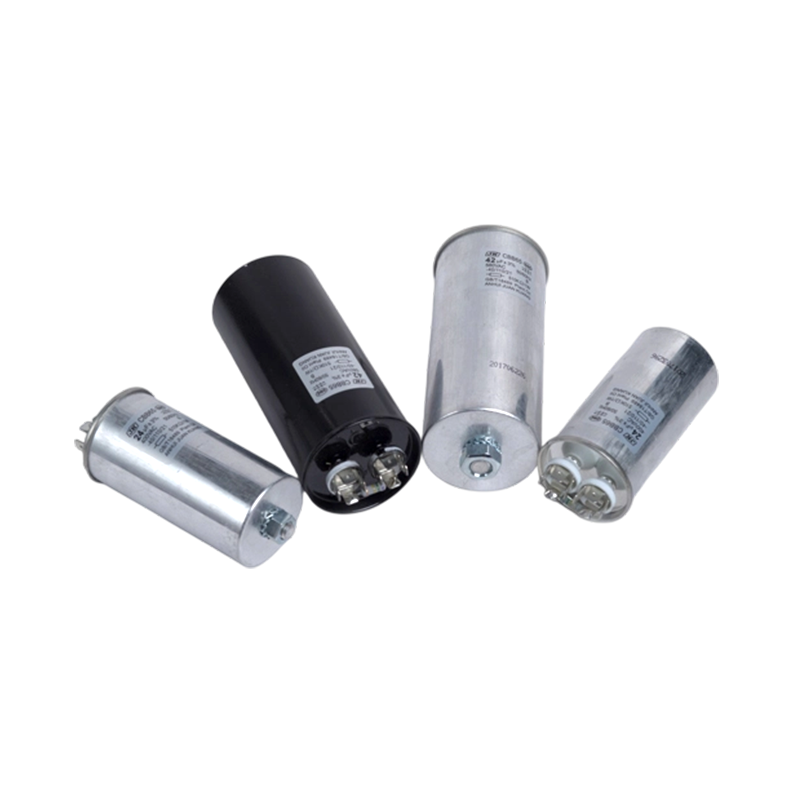 CBB65 HID Lighting Capacitors, 110°C Cylinder CaseReview these 110°C cylindrical aluminum AC film capacitors for HID lighting, with rated voltage, tolerance, dimensions, and electrical specifications available for production sample checks.View Product →
Lighting Compensation Capacitors: Class A and Class B Are Different Risk Profiles
Lighting compensation capacitors correct power factor in lamp circuits, and the choice between Class A and Class B mechanical anti-explosion construction should follow the failure mode you are designing for, not the lowest unit price.
Class A aluminum-case capacitors are common where the fixture has controlled thermal conditions and the compensation circuit is protected. Class B mechanical anti-explosion aluminum-case parts add a construction feature intended to contain pressure events, so they are specified where the lamp circuit or end-use standard calls for that protection level.
Class A lighting compensation
Use when the fixture has a defined thermal path and the compensation circuit is protected against abnormal pressure events by the enclosure design.
- Aluminum case for direct mounting
- Common in controlled ballast compartments
- Selected by capacitance, voltage, and fit
Class B mechanical anti-explosion
Use when the lamp circuit or end-use standard calls for mechanical anti-explosion construction in the compensation capacitor.
- Aluminum case with added containment feature
- Specified by safety class, not capacitance alone
- Needs drawing review before approval
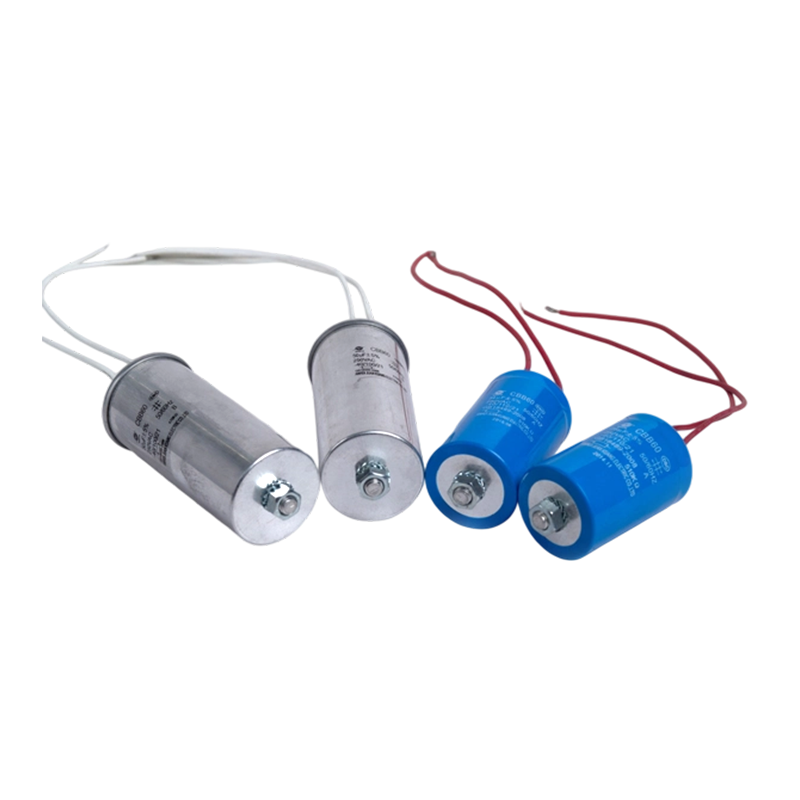 Class B Lighting Compensation Capacitor, Aluminum CaseFor lamp circuits requiring mechanical anti-explosion compensation, this sealed metallized film capacitor offers discharge resistance, overload capacity, and cylindrical aluminum-case options.View Product →
Fit, Case Shape, and Thermal Path Decide the Final Part Number
Case shape is a thermal and mechanical decision, not a packaging detail. Cylinder and oval aluminum cases fit different lamp housings and heat paths.
A cylinder aluminum case fits many HID cans and ballast compartments with a round clamp or end cap. An oval aluminum case can solve clearance problems in compact fixtures, but the flatter body may change how heat reaches the can wall. Plastic cases reduce weight and cost in some compensation designs, while aluminum cases give a more direct thermal path when the fixture is tight.
- Start with the fixture drawing. Record the available length, diameter or oval width, lead length, and terminal orientation.
- Check the thermal location. Note whether the capacitor sits near the lamp, above the ballast, or behind a cover that traps air.
- Match the temperature and voltage class. Do not trade a 110 C part for a 100 C part to gain a smaller case.
- Validate on the bench and in the fixture. Confirm capacitance, power factor correction, and case temperature after warm-up.
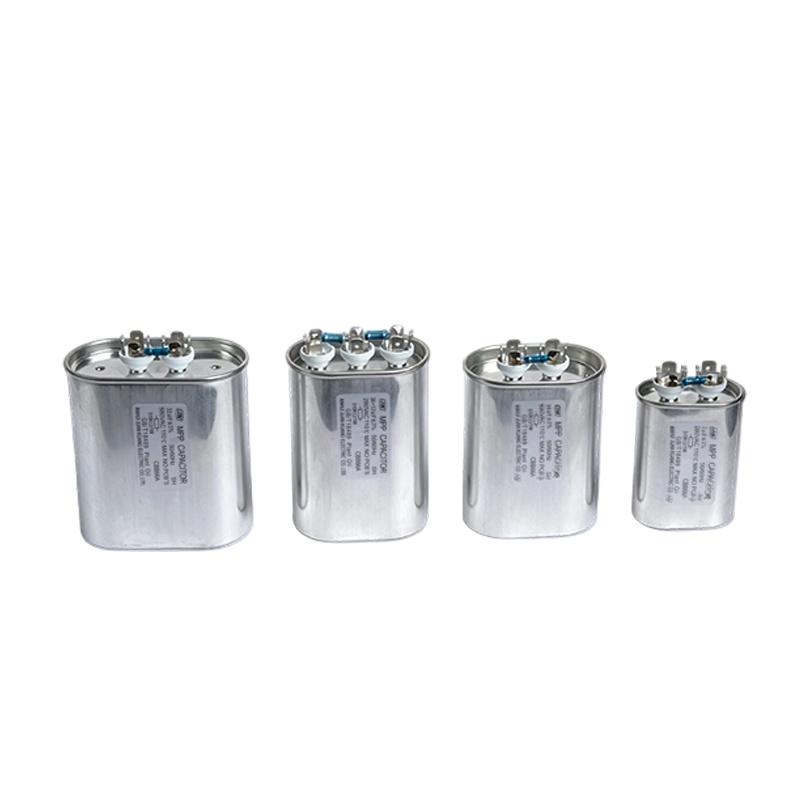 CBB66A HID Lamp Capacitor, 110°C Oval CaseUse this oval aluminum-case capacitor for HID and high-pressure sodium circuits where compact clearance and 110°C operation matter, with explosion-proof protection and low-loss film construction.View Product →
Metallized Film and Self-Healing Behavior Set the Long-Term Drift
Film selection controls how capacitance drifts under AC stress, and metallized polypropylene is the base for most lighting capacitors in this class.
Aluminum metallized polypropylene film and aluminum-zinc metallized polypropylene film are both used in capacitor production. The metallization, film thickness, winding tension, and end connection affect self-healing, ESR, and capacitance stability. A capacitor can pass a room-temperature capacitance check and still drift badly if the film and winding are not matched to the AC load and temperature.
This is also where supplier depth matters. A manufacturer that controls metallized film and capacitor winding can trace changes in film lot, coating, and winding without guessing. Anhui Yuanguang Electric has worked in film capacitors since 1995 and covers metallized film for capacitors as well as finished lighting capacitors; its film capacitor manufacturing process is relevant when you need batch consistency, not just a sample.
Supplier Checks Before You Approve a Lighting Capacitor Sample
Approve a lighting capacitor supplier on process control and change notification, not on a single passing sample.
Ask how the supplier controls metallized film, winding, impregnation or sealing, and final test. For lighting parts, the critical checks are capacitance at temperature, voltage withstand, insulation resistance, case dimensions, and marking traceability. If the part is used in compensation, confirm the class and construction. If it is used in HID or metal halide, confirm the temperature class and case style against the fixture drawing.
- Request the drawing with case material, shape, dimensions, lead length, and temperature marking.
- Ask for the capacitance tolerance and test condition, not only the nominal microfarad value.
- Confirm whether the part is Class A or Class B when compensation is specified.
- Require change notification for film source, metallization, winding, or case material.
- Check that the supplier can discuss standards and test methods, not only price and lead time.
Lighting Capacitor FAQ
Most lighting capacitor questions come down to temperature class, compensation class, and mechanical fit.
Are 100 C and 110 C lighting capacitors interchangeable?
No. They may share capacitance and voltage, but the temperature class is part of the part specification. Use the class that matches the fixture measured or specified case temperature.
What is the difference between Class A and Class B lighting compensation capacitors?
Class A is the standard aluminum-case compensation construction. Class B adds mechanical anti-explosion construction for applications that require it. Match the class to the fixture standard and failure-mode requirement.
Can a motor-run capacitor be used in an HID fixture?
Not automatically. Motor-run capacitors are selected for motor duty, while lighting capacitors are selected for lamp circuit temperature, voltage stress, and case fit. A similar microfarad rating does not make the parts interchangeable.
What should I send for a lighting capacitor quote?
Send the capacitance, tolerance, rated voltage, temperature class, case shape and material, dimensions, lead configuration, mounting method, and expected annual volume. A fixture drawing or sample photo reduces quotation errors.