Metallized Polypropylene Film Manufactured In-House
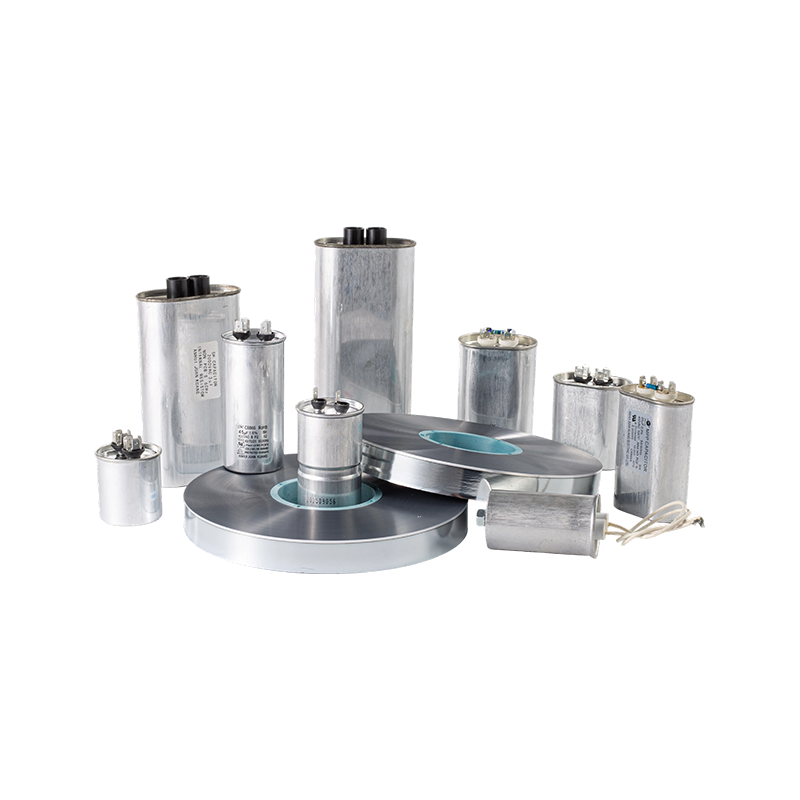
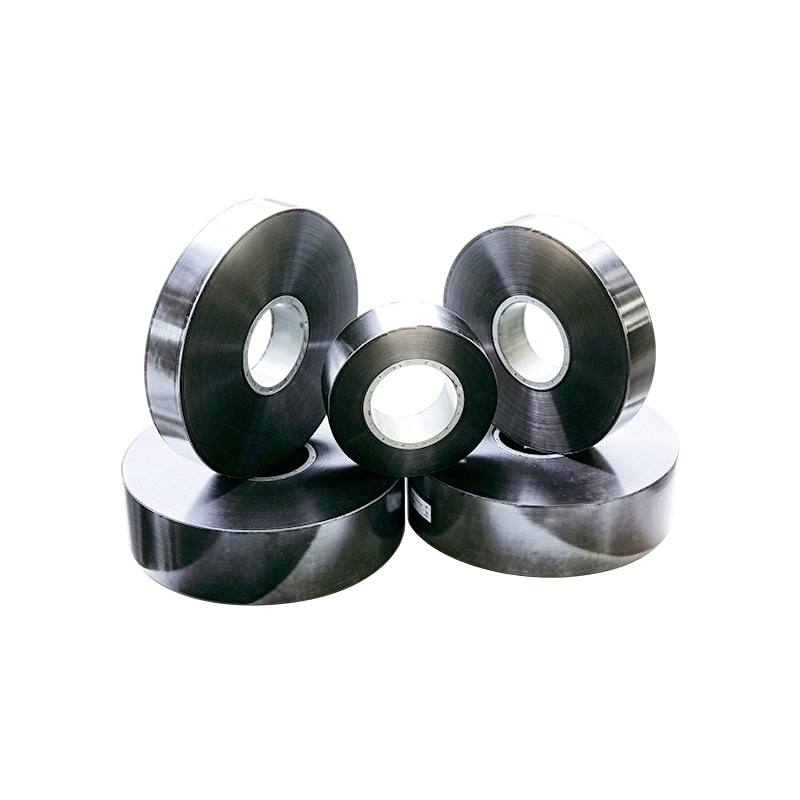
AnHui JuanKuang Electric Co., Ltd. has manufactured film capacitors in Ningguo City, Anhui Province, China since 1995, and metallized polypropylene film is the material base of that work. We metallize high-purity BOPP base film under high vacuum, slit it to the winding width with defined free margins, and supply it in roll form for CBB motor capacitors, lighting capacitors, power capacitors, DC filter and DC-link designs. Film metallizing, winding, welding, spray coating, assembly and testing operate within one manufacturing system, so film specifications are set against the capacitor that will be wound from them.
As a Metallized Polypropylene Film for Capacitor manufacturer, we supply two coating systems — pure aluminium (MPPA) and aluminium-zinc composite (MPPAZ) — and build each order around voltage class, capacitance target, winding equipment and the failure behaviour required by the end application.
Our Range: Aluminium and Al-Zn Metallized Film
Both film types use biaxially oriented polypropylene as the dielectric, with a vacuum-deposited metal layer that acts as electrode and carries the self-healing function. The coating metal, sheet resistance and margin layout are the three variables that decide which film suits a given capacitor design.
| Property |
Al metallized film (MPPA) |
Al-Zn metallized film (MPPAZ) |
| Metal layer |
Pure aluminium |
Aluminium-zinc composite |
| Sheet resistance |
2–20 Ω/□, set per order |
Adjusted across a wide range per order |
| Dissipation factor |
2×10⁻⁴ at 1 kHz; 3×10⁻⁴ at 100 kHz |
4×10⁻⁴ at 1 kHz; 5×10⁻⁴ at 100 kHz |
| Breakdown voltage |
>250 VDC/µm from 4 µm; >300 VDC/µm from 5 µm |
>250 VDC/µm from 4 µm; >300 VDC/µm from 5 µm |
| Pinhole density |
≤2 pcs/m² at 100 VDC/µm |
≤2 pcs/m² at 100 VDC/µm |
| Self-healing |
Fault point cleared by aluminium vaporisation |
Faster clearing, smaller cleared area, more complete insulation recovery |
| Typical fit |
High-volume CBB60/61/65, CBB21, cost-controlled lines |
PFC, DC filter, higher electrical stress, predictable failure mode |
For a first selection, Al metallized polypropylene film covers mainstream capacitor production with mature, stable coating and the lowest material cost. Al-Zn metallized polypropylene film is the choice where self-healing activity and a gentle failure mode matter more than minimum dissipation factor.
Where Each Film Fits in the Capacitor Range
AC motor capacitors
CBB60 washing-machine and pump capacitors, CBB61 fan capacitors and CBB65 compressor capacitors are wound from both film types. Al film suits long, stable production runs; Al-Zn film is used where repeated self-healing under overvoltage and a gradual capacitance decline are preferred to a sudden open or short.
Lighting capacitors
Lamp capacitors for municipal, road and stadium lighting operate at elevated temperatures and need film with consistent thickness and clean margins so that capacitance stays within band over long service.
Power capacitors and PFC
Low-voltage shunt compensation and power-factor correction capacitors carry continuous AC current and switching transients. Al-Zn film with a sheet-resistance grade matched to the current load gives the clearing behaviour these units need.
DC filter, DC-link and EMI suppression
CBB21-type and PCB-mount filter capacitors, DC-link and three-phase AC filter designs use thinner film at moderate sheet resistance to keep losses low while retaining self-healing capability.
High-voltage microwave oven capacitors
These parts run at high voltage with limited space, so thicker base film and a higher breakdown margin are specified, with the coating grade selected for stable performance under repeated charge and discharge.
Thickness, Slitting and Free-Margin Control
Base film thickness sets the voltage rating per winding turn, while slit width and margin geometry determine how the roll behaves on the winding machine. We supply standard thicknesses from 4 µm to 15 µm with other thicknesses produced on request, and slit widths from below 25 mm to 150 mm with tolerances matched to the width band.
| Slit width (mm) |
Width tolerance |
Free margin (mm) |
Margin tolerance |
| <25 |
±0.3 mm |
1.5 |
±0.3 mm |
| 25–35 |
±0.4 mm |
2 |
±0.4 mm |
| 35–150 |
±0.5 mm |
2.5 |
±0.4 mm |
Film thickness is held to ±8% for 4–9 µm and ±7% for 10–15 µm, with other thicknesses available on request. Inside margins, both-side margins and special widths are produced to drawing, which lets the winding operation align the free edge without trimming or re-slit on arrival.
Coating Resistance, Self-Healing and Electrical Design
Sheet resistance is the practical lever between conduction loss and clearing energy. Low sheet resistance carries high current with lower losses; high sheet resistance limits the energy available at a fault point and strengthens self-healing.
- BOPP dielectric constant approximately 2.2 at 1 kHz and 20 °C, with dissipation factor in the 10⁻⁴ range.
- Insulation resistance of 100,000 MΩ·µF at 20 °C, supporting low-leakage filter and coupling designs.
- Water absorption below 0.1% after 24 hours at 20 °C, so roll storage and line humidity remain the controlling factors for moisture pickup.
- Density 0.91 g/cm³, tensile strength above 100 N/mm² and modulus of elasticity 2,300 N/mm², giving the film the mechanical stability needed for automatic winding.
- BOPP film performance maintained from −40 °C to +105 °C, matching industrial and appliance-grade capacitor specifications.
These film properties feed directly into the capacitor family we wind in-house, which is why we can discuss a film order in terms of the metallized film capacitors it will become rather than as an isolated material.
Winding-Line Integration, Storage and Handling
Roll geometry, slit quality and margin position are agreed against the customer's winding equipment before production. Consistent slit width and a clean metallized edge reduce edge discharge and winding misalignment, particularly on narrow CBB61 and CBB65 elements.
- Rolls are packed for export and should stay sealed until the film has acclimated to the winding room temperature.
- Store away from direct sunlight, heat sources and humidity, with rolls kept horizontal and supported to avoid edge damage.
- Winding tension and edge guiding are set on the customer's machine; stable slit width makes those settings repeatable between rolls and batches.
- Roll length, core dimensions and splice requirements are confirmed in the order specification before slitting.
Quality Control, Inspection and Compliance
Metallizing runs on high-vacuum coating equipment, and the film area is managed under the same documented production system as capacitor manufacturing: incoming base-film inspection, coating parameter control, in-line checks, semi-finished inspection and final inspection before shipment. Coating thickness and sheet resistance uniformity are monitored to keep batch-to-batch variation low for continuous production lines.
- Recorded checks cover base film thickness, slit width, margin width, sheet resistance and pinhole count against the agreed limits.
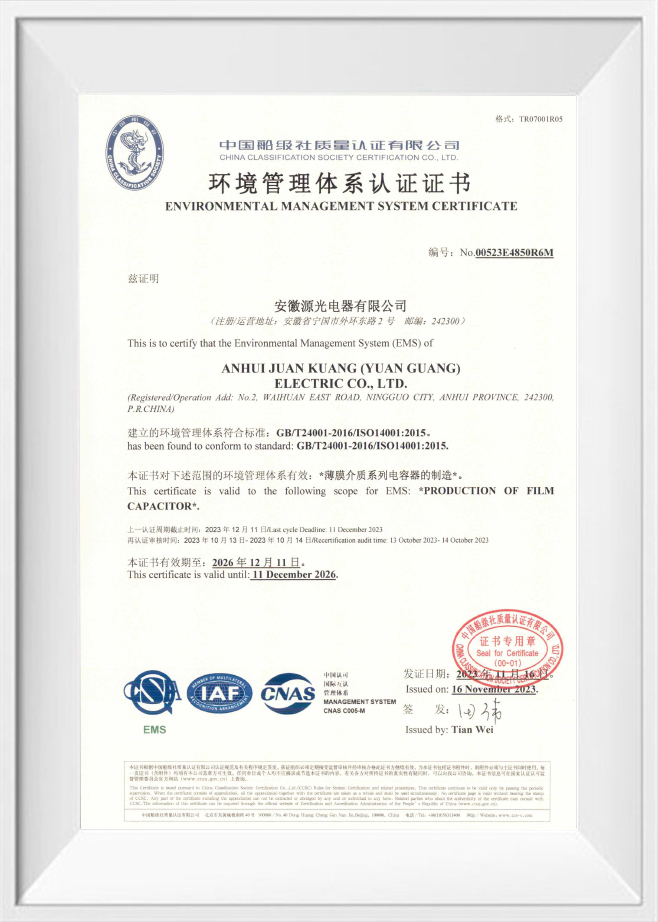
- ISO 9001 quality management and ISO 14001 environmental management systems are certified.
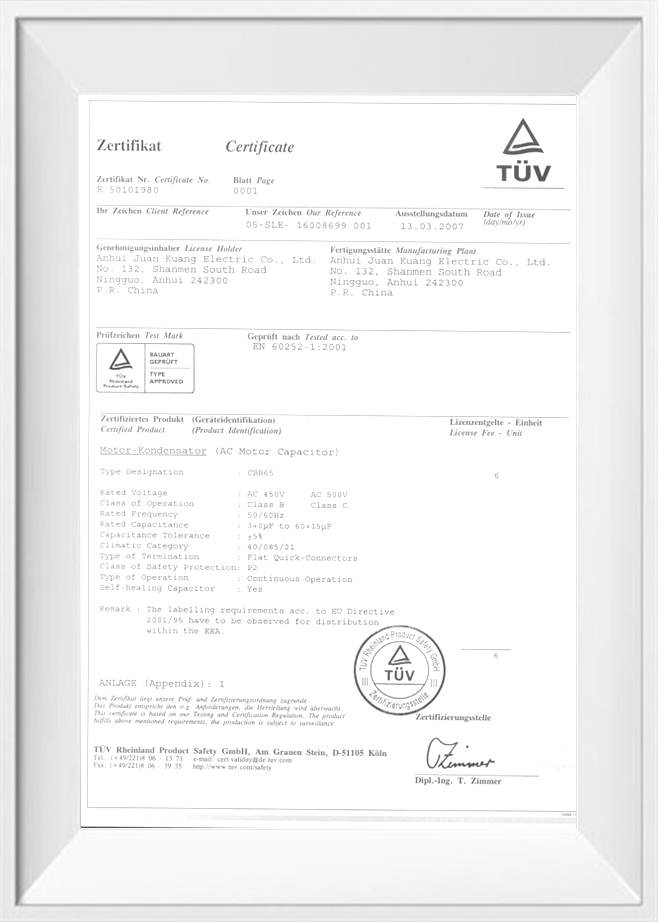
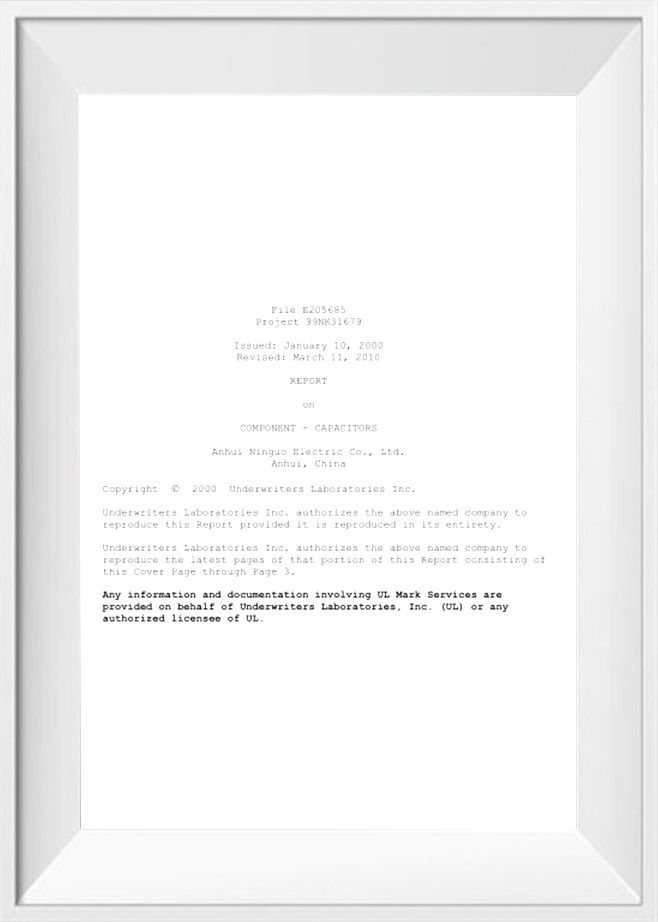
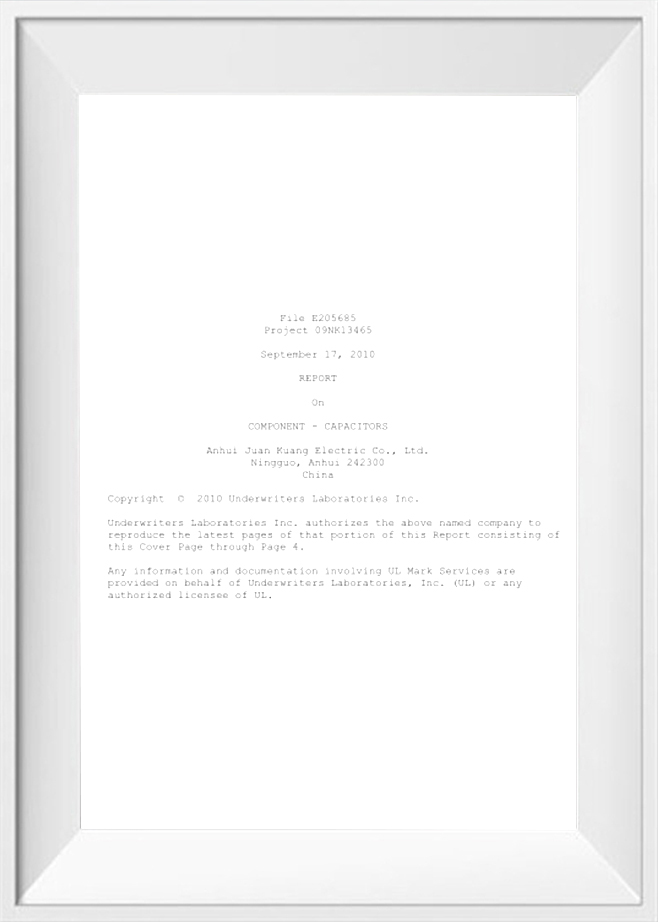
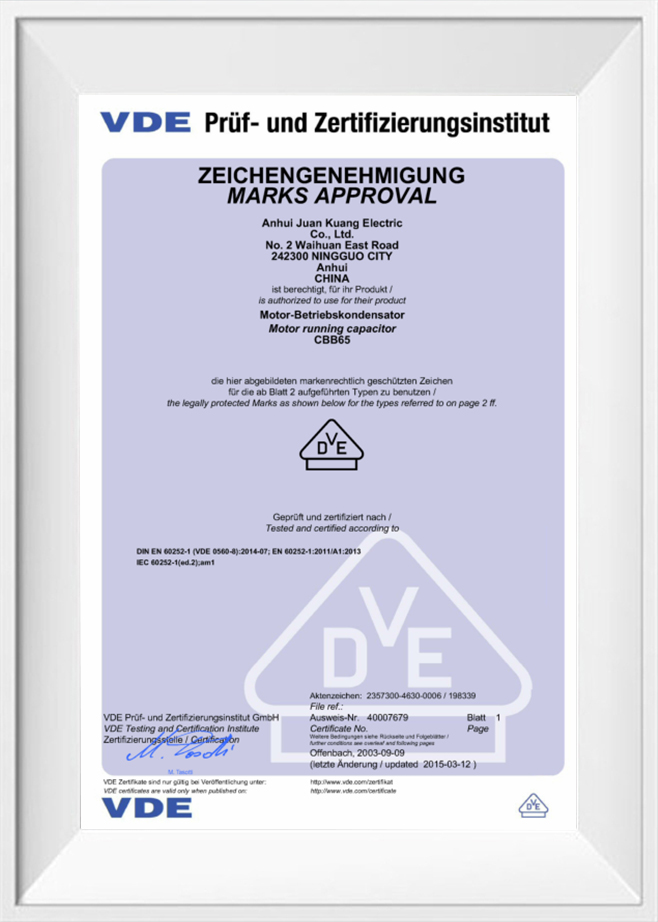
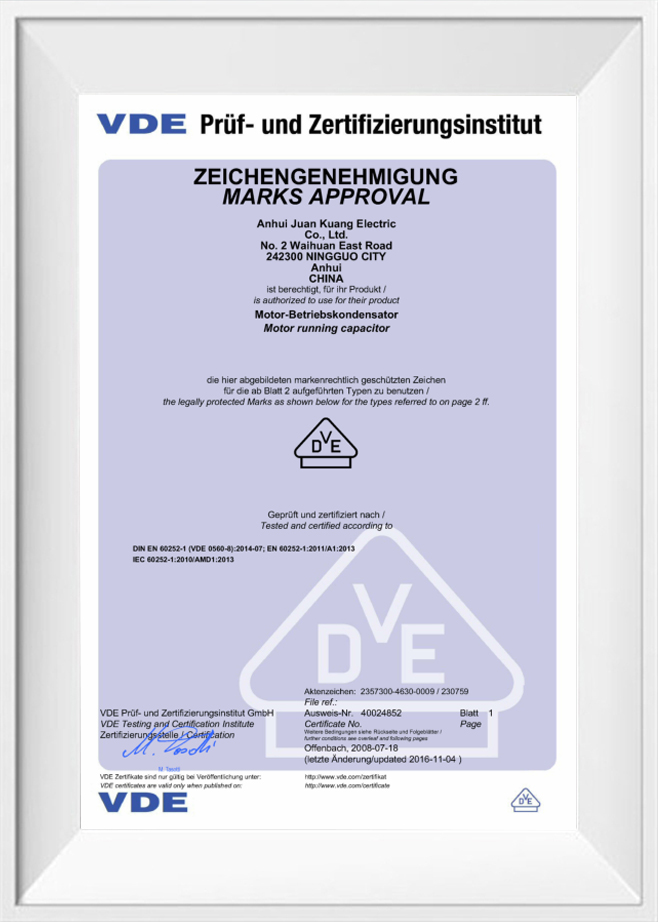
- Our capacitor products hold UL, VDE, CE and CQC certifications, and materials comply with RoHS, REACH, TSCA and POPs requirements.
- A 2,000 m² R&D and testing centre supports coating development, failure analysis and customer-specific film grades.
- Manufacturing covers 53,000 m² with annual capacitor output of 40 million pieces and more than 90 patents, including 16 invention patents.
Packaging, Documentation and Delivery Scope
Delivery scope is defined per order: film type, base thickness, slit width, margin layout, sheet resistance grade, roll format, quantity and packaging. Export packing protects the metallized surface and slit edges through sea freight, with air freight arranged from Ningbo or Shanghai when a line needs film ahead of schedule. Order documentation follows the agreed inspection plan, and labelling is matched to the customer's receiving and traceability system.
Information We Use to Configure Your Solution
Capacitor Filmquotation is prepared from the capacitor design and the winding line, not from a generic catalogue grade. The following inputs let us confirm a specification without a trial-and-error cycle:
- Capacitor type and series, rated voltage, capacitance and expected electrical stress.
- Required base film thickness, or the voltage per micron the design targets.
- Slit width, free-margin layout (single-side, both-side or inside margin) and tolerance class.
- Preferred coating system — pure aluminium or Al-Zn — and target sheet resistance.
- Winding equipment details, roll length, core dimensions and splicing preference.
- Annual volume, release quantities and packaging or labelling requirements.
- Inspection data, certificate of conformity and compliance documentation needed at receiving.
Frequently Asked Questions
What is the difference between Al and Al-Zn metallized polypropylene film?
Al film uses a pure aluminium layer with stable electrical performance and mature, cost-efficient coating. Al-Zn film adds zinc to speed up self-healing, reduce the cleared area and produce a gradual capacitance decline rather than a sudden failure under overvoltage stress.
Which thicknesses and slit widths can you supply?
Standard base film thicknesses are 4, 5, 6, 7, 8, 9, 10, 12 and 15 µm, with other thicknesses produced on request. Slit widths run from below 25 mm to 150 mm, with free margins of 1.5, 2 or 2.5 mm and special margin layouts made to drawing.
Can sheet resistance be set for a specific capacitor design?
Yes. Al coating is controlled in the 2–20 Ω/□ range, and Al-Zn coating is adjusted across a wide range. Low values suit high-current capacitors; higher values enhance self-healing for designs that must tolerate transient faults.
How is film quality checked before shipment?
Thickness, slit width, margin width, sheet resistance and pinhole density are inspected against the agreed order limits, with pinhole density held at or below 2 pcs/m² at 100 VDC/µm. Inspection records and compliance documents are provided as specified in the order.
Do you also manufacture the capacitors that use this film?
Yes. We produce CBB-series metallized polypropylene capacitors for AC motors, lighting, high-voltage microwave ovens and power applications, so film specifications can be developed alongside the finished component and its acceptance tests.

 English
 中文简体
 Français
 русский
 Español
 عربى