 English
 中文简体
 Français
 русский
 Español
 عربى
Content
AC motor capacitors sit in the least glamorous corner of the bill of materials and account for a disproportionate share of appliance field returns. What follows covers what these parts do in the circuit, how CBB model numbers map onto real appliances, which parameters actually predict life, and what belongs in a purchase specification so that the next batch behaves like the last one.
What an AC motor capacitor does in the circuit
An AC motor capacitor is a metallized polypropylene film capacitor wired in series with the auxiliary winding of a single-phase motor, sized so the current in that winding leads the main winding current by close to 90 electrical degrees.
On its own, a single-phase supply cannot start a loaded motor. With only the main winding energised the field pulses in place, the rotor sits still, and current climbs until the protector opens. Add the capacitor and the auxiliary winding, and the motor behaves like a rough two-phase machine with enough torque to accelerate a compressor, a drum or a fan blade.
There are two duties, and they use two different components. The run capacitor stays in circuit for the entire operating cycle and is built for thousands of hours of continuous AC stress, which is why it uses metallized film and a sealed case. The start capacitor is an electrolytic part, ten to fifty times larger in capacitance, switched out within a second or two by a centrifugal switch or a current relay and never designed to carry current continuously.
| Parameter | Run capacitor | Start capacitor |
| Typical capacitance | 1 to 20 uF | 70 to 1000 uF |
| Dielectric | Metallized polypropylene film | Aluminium electrolytic |
| Duty | Continuous, full operating cycle | Seconds per start, then switched out |
| Typical rated voltage | 250, 400 or 450 VAC | 125 to 330 VAC |
| Circuit position | Permanently connected | Centrifugal switch or current relay |
| Failure signature | Slow capacitance loss, then hum and overheating | Venting, swelling, open circuit |
Matching the CBB model number to the appliance
The CBB series covers almost every single-phase appliance motor, and the model number mainly encodes case geometry, mounting and the thermal environment the part is built for rather than a change of dielectric.
All of them are metallized polypropylene film capacitors with self-healing behaviour: a local breakdown vaporises a thin patch of metallization and clears the fault instead of shorting the film. What changes between models is how the element is packaged, how heat leaves it, and how it is fixed inside the appliance.
| Model | Case and shape | Typical application | Notes |
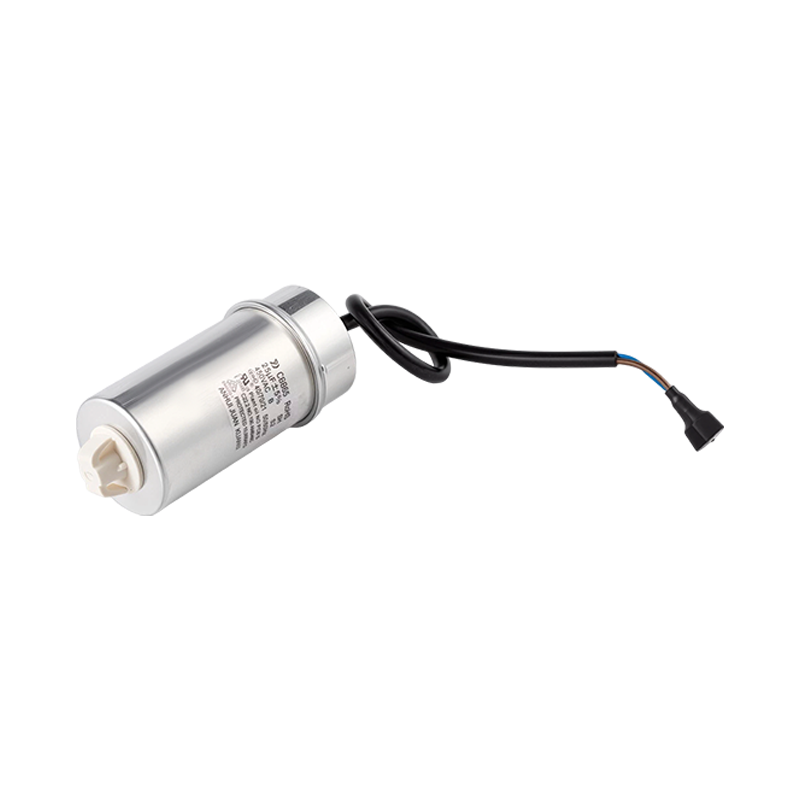
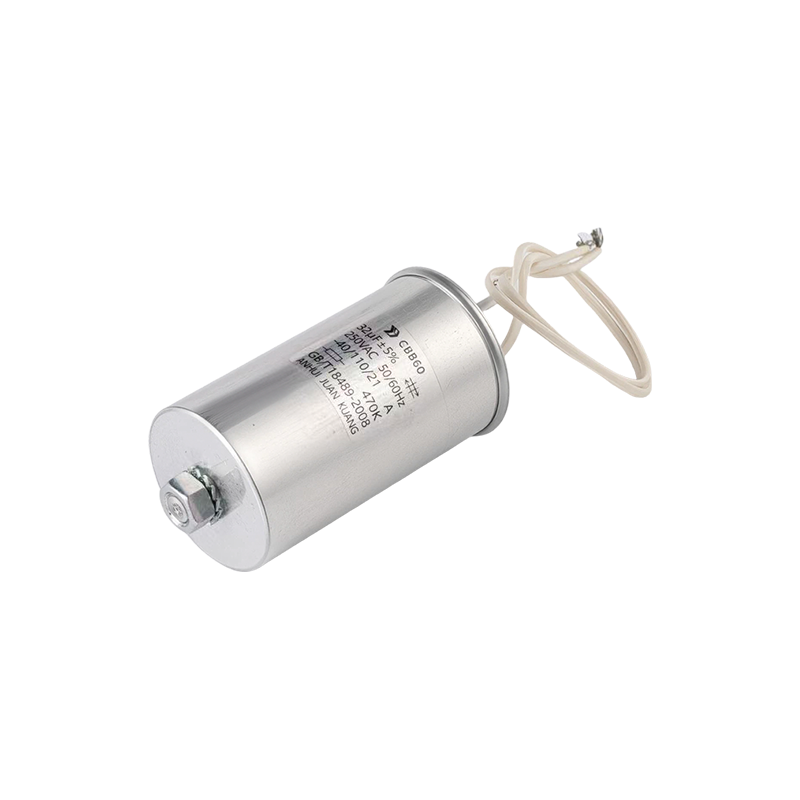
| CBB60 | Cylindrical plastic | Washing machine motors, pumps | Low profile, flying leads, 250 or 450 VAC |
| CBB61 | Rectangular plastic | Fans, range hoods, small refrigeration | Terminal spacing and lead length follow the drawing |
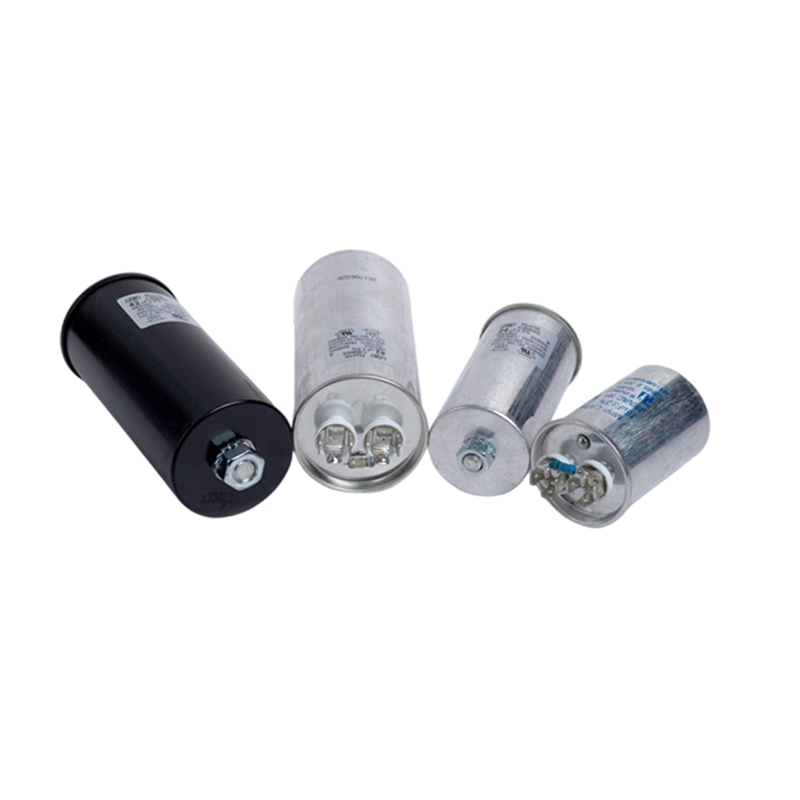
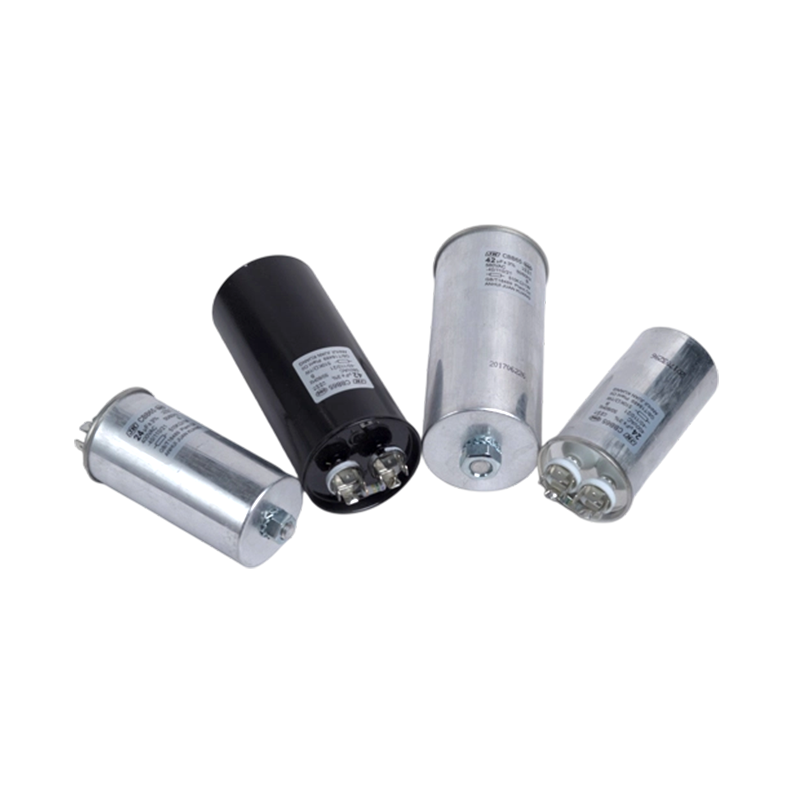
| CBB65 | Cylindrical aluminium | Air conditioner and refrigerator compressors | Higher thermal mass, clamp mounted |
| CBB65A | Cylindrical aluminium | Compressor duty, alternative internal fill | Check the drawing before a drop-in substitution |
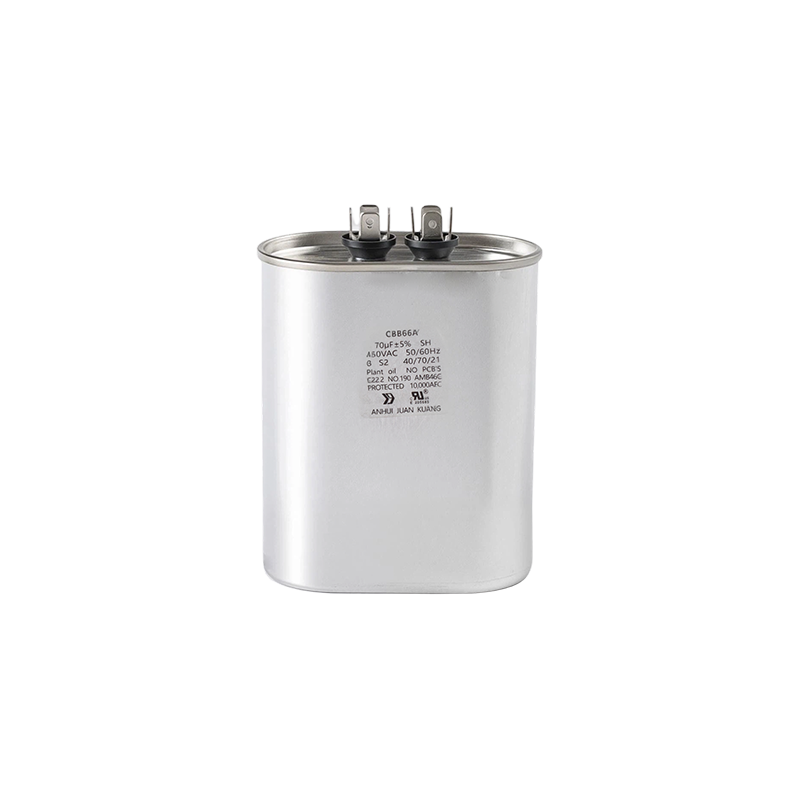
| CBB66A | Oval aluminium | Outdoor units, HID luminaires | Oval can fits narrow compartments |
| CH85 | Rectangular, high voltage | Microwave oven | Around 2100 VAC, 0.8 to 1.2 uF, built-in discharge resistor |
Compressor duty is the harshest continuous application in a household appliance. An outdoor unit can sit at 60 C to 70 C internal ambient, the capacitor is mounted next to a hot discharge line, and it stays energised for hours at a time.
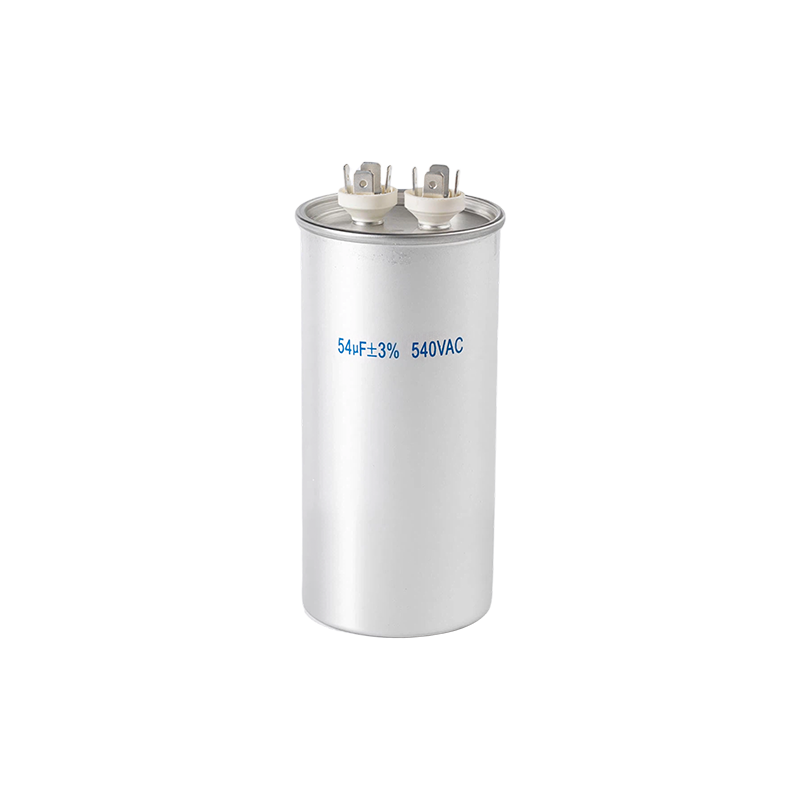 CBB65 Air Conditioner Compressor Capacitor, Cylindrical Aluminum CaseCBB65 metallized film capacitor for air-conditioner compressors in cylindrical aluminum cases, rated for high ambient compressor duty and long energised operation.View Product →
A cylindrical aluminium case is used here for a reason: the can spreads heat from the element into the surrounding air and gives the mounting clamp something rigid to grip. Plastic-case parts are cheaper and lower profile, which makes them the right answer for fans and small refrigeration, where ambient is lower and airflow is designed in.
Three numbers that predict field life
Rated voltage, capacitance tolerance and maximum ambient temperature tell you more about expected field life than the model number or the unit price does.
Voltage margin comes first. A 250 VAC part on a 230 V line leaves almost nothing for the +10 percent line tolerance, for harmonic distortion, or for the back-EMF spike at switch-off. A 400 or 450 VAC rating is not oversizing; it is headroom. Parts running close to their rated voltage self-heal more often, and every self-healing event removes a little metallization and a little capacitance.
Tolerance comes second. A +/-10 percent part forces the motor designer to accept a less balanced field at end of life, and capacitance also drifts downward as the film self-heals. On a fan motor with 1.5 uF nominal, a 10 percent starting loss plus a 5 percent life drift is already the difference between starting on a hot afternoon and tripping.
Temperature comes third and usually decides the outcome. As a working rule, every 10 C above the rated ambient roughly halves expected life. Endurance classes in IEC 60252-1, the standard that GB/T3667.1 follows, map to 30,000, 10,000 and 3,000 hours of rated operation, so a supplier quoting long life without naming a class and an ambient is not quoting anything measurable.
Fan motors in range hoods, bathroom extractors and outdoor units follow the same logic at smaller capacitance, and the rectangular plastic case with fixed terminal spacing is the standard answer for that geometry.
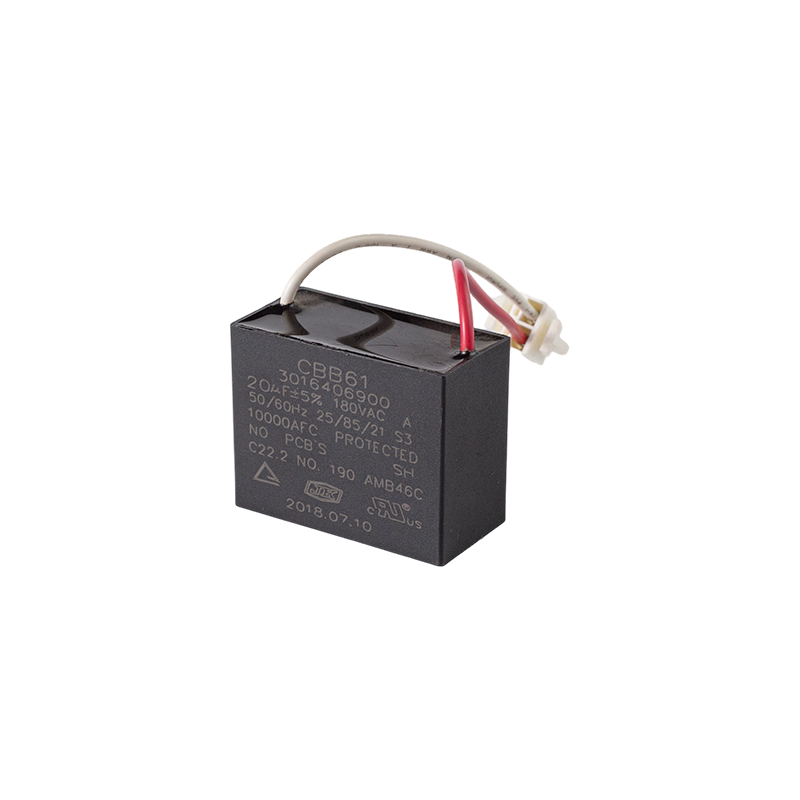 CBB61 Fan Motor Capacitor, Square Plastic CaseCBB61 metallized film capacitor for fans and exhaust fans in a rectangular flame-proof plastic case, suited to smaller-capacitance motor start and run duties.View Product →
Failure signatures and what each one tells you
Most AC motor capacitor returns are wear-out rather than manufacturing defects, and the physical signature points to the stress that caused the wear.
- Gradual capacitance loss. The motor hums, starts slowly or trips on hot days. Measure capacitance at the rated frequency; anything more than 10 percent below nameplate means the self-healing reserve is spent.
- Dielectric breakdown. The motor trips the breaker instead of the thermal protector, and the can may bulge. This is overvoltage, a transient or the end of self-healing capacity, not a random defect.
- Case swelling or oil seepage. Thermal overload. Check the ambient rating against the real compartment temperature, airflow and mounting orientation before blaming the batch.
- Falling insulation resistance. Moisture at the terminal block or a cracked epoxy seal shows up as leakage current and intermittent trips, often after a humid season rather than at first power-up.
- Terminal and lead fatigue. Vibration work-hardens the crimp. The connection fails before the film does, which is a mechanical design issue in the harness, not a capacitor issue.
What to put in the purchase specification
Write the specification around measurable parameters, and verify every one of them on the sample report before the batch is released.
- Capacitance value plus tolerance letter code, with test frequency and test temperature stated
- Rated voltage and the supply conditions it must survive, including line tolerance and harmonics
- Endurance class in hours and the ambient temperature that class applies to
- Case drawing, terminal spacing, lead length and marking durability
- Safety class, plus discharge resistor where the part is a start or microwave capacitor
- Batch traceability, film source and date code on the can
- Tolerance described as standard, with no test conditions
- 250 VAC parts offered for 230 V lines to hit a price
- No endurance class and no ambient rating on the datasheet
- Terminal spacing drifts between batches
- Failures surface at the end of the assembly line
- Tolerance code, frequency and temperature on the datasheet
- 450 VAC continuous rating with margin for harmonics
- Endurance class in hours against a declared ambient
- Drawing-controlled case, terminals and lead length
- Incoming checks on capacitance, loss angle and insulation resistance
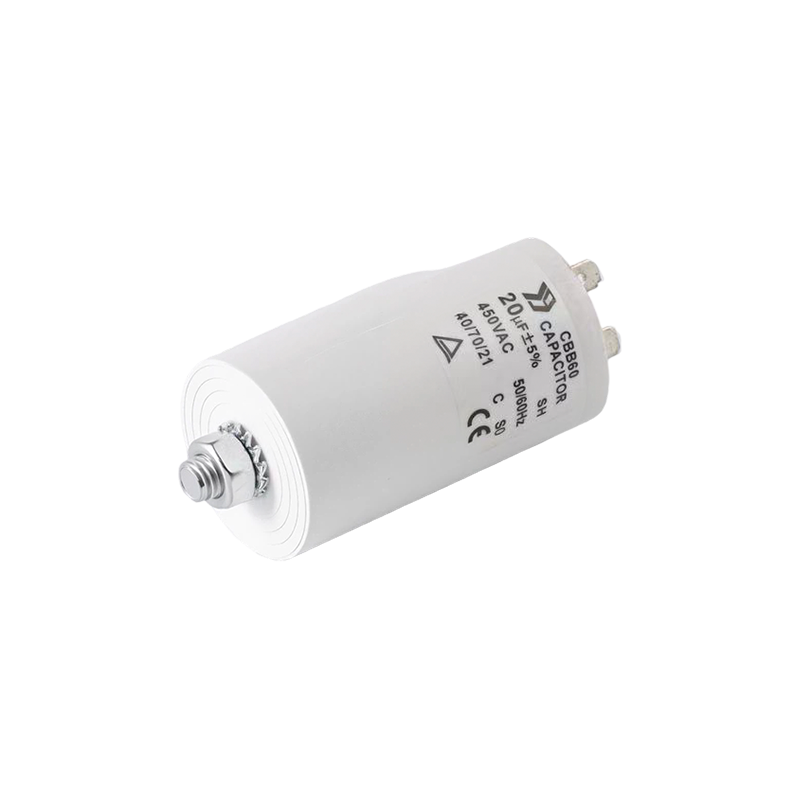
In washing machine motors the same film capacitor sits in a plastic cylinder close to the motor frame, where vibration and moisture rather than heat set the limit. That is a different mounting problem with the same electrical requirement, and it is worth writing into the drawing rather than leaving to the supplier.
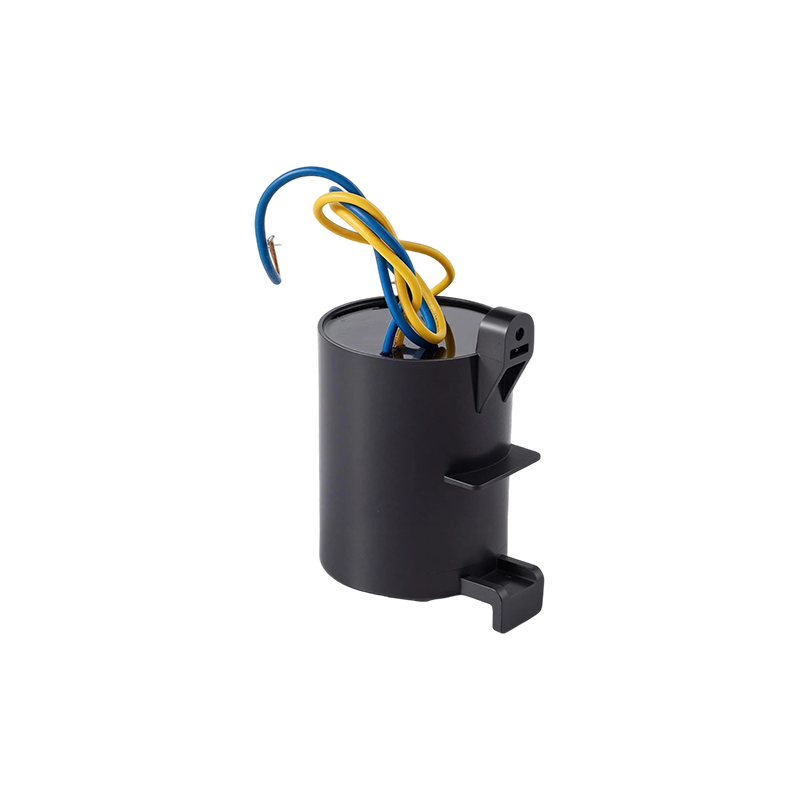 CBB60 Washing Machine Motor Capacitor, Cylinder Plastic CaseCBB60 metallized film capacitor for washing-machine motors in a cylindrical plastic case, addressing vibration and moisture limits near the motor frame.View Product →
It also helps to know who actually controls the film. A supplier that metallizes its own polypropylene can hold capacitance drift and self-healing behaviour within a defined window instead of buying whatever film is available, and the same background usually shows up in standardized testing: one domestic manufacturer took part in drafting GB/T3667.1, the Chinese counterpart to IEC 60252-1, and has published capability and quality controls covering both film and finished components. Buyers who want the longer history can review the company profile before an audit.
Frequently asked questions
What is the difference between a start capacitor and a run capacitor?
A run capacitor stays in circuit continuously and uses metallized film at 1 to 20 uF, while a start capacitor is an electrolytic part of 70 to 1000 uF that is switched out within seconds. They are not interchangeable in either direction.
Can a 450 VAC capacitor replace a 250 VAC one?
Yes, provided the capacitance and case geometry match. The higher voltage rating only adds margin, while a lower rating than the original removes it and shortens life.
How do I test an AC motor capacitor?
Disconnect at least one lead, discharge the terminals through a resistor, then measure capacitance with a meter that works at 50 or 60 Hz. A reading more than 10 percent below nameplate, or visible swelling, means replacement.
Why do air conditioner capacitors fail more often than washing machine capacitors?
Because of ambient temperature and duty. A compressor capacitor runs continuously in a 60 C to 70 C compartment, so it consumes its endurance class hours far faster than a washing machine capacitor that works for a few cycles a week.