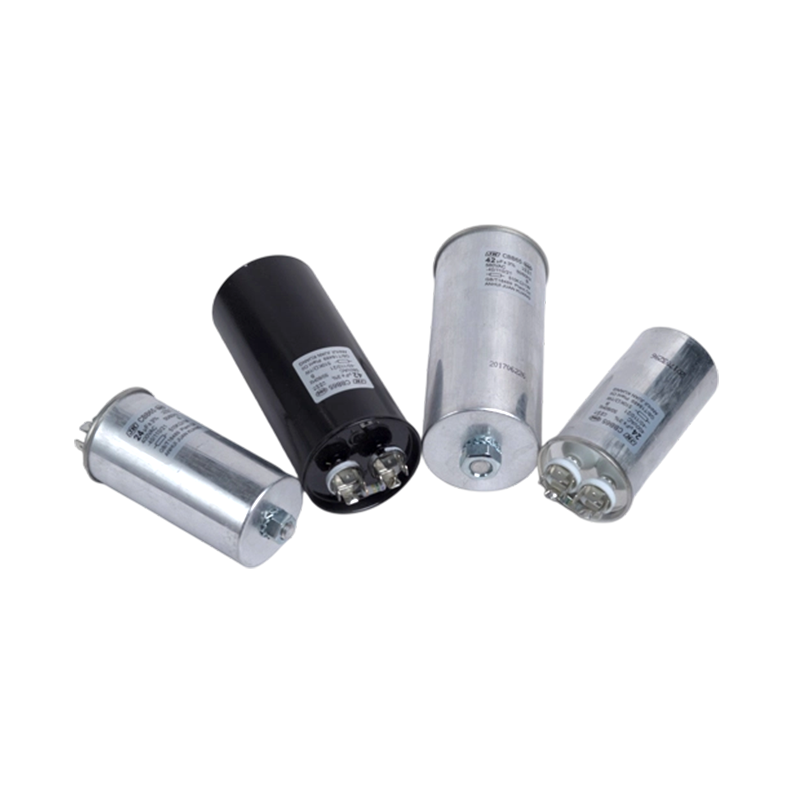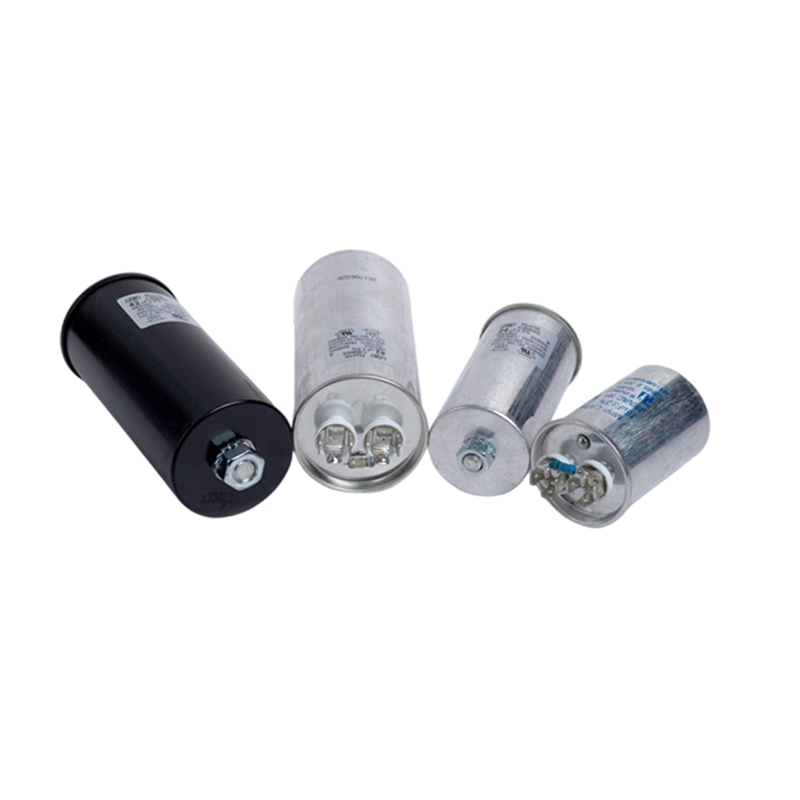
 English
 中文简体
 Français
 русский
 Español
 عربى
Content
- 1 What a Lighting Capacitor Does in a Fixture
- 2 100 °C and 110 °C Classes Are Not Interchangeable
- 3 HID and Metal Halide Lamp Capacitors
- 4 Compensation Capacitors and the Class A versus Class B Split
- 5 Sizing: Microfarads, Voltage and Can Dimensions
- 6 Failure Modes You Will Actually See
- 7 A Sourcing Checklist for Lighting Capacitors
- 8 Frequently Asked Questions
A 400 W metal halide floodlight that drops out after twenty minutes is rarely a lamp problem. In most fixtures we are asked to look at, the ballast is still healthy and the part that has drifted is the lighting capacitor bolted beside it: capacitance falls, lamp current climbs, and the fixture either restarts or keeps cooking its own wiring until the lamp refuses to strike at all.
A capacitor is a low-cost line in the bill of materials and a disproportionately large line in field-failure statistics. The variables are the same for every supplier: metallized polypropylene film, an AC voltage rating, a temperature class, and a can that has to fit inside a housing somebody else already designed.
What a Lighting Capacitor Does in a Fixture
A lighting capacitor is wired in parallel with the inductive ballast to cancel reactive current, lifting the fixture power factor from roughly 0.4 to 0.5 uncorrected up to 0.9 or better.
A magnetic ballast is an inductor, and an inductor needs magnetising current that lags the mains voltage. An uncorrected fixture therefore draws substantially more current than the lamp wattage suggests. Placing a film capacitor across the ballast terminals supplies that reactive current locally: line current falls, breaker and cable sizing relax, and the power factor charge from the utility goes away.
In HID circuits the capacitor does a second job. Together with the ballast inductance it forms the resonant circuit the ignitor uses to build the starting pulse. That is why a part that has lost 15 percent of its capacitance can leave a lamp flickering or failing to strike on a cold morning instead of simply drawing more current.
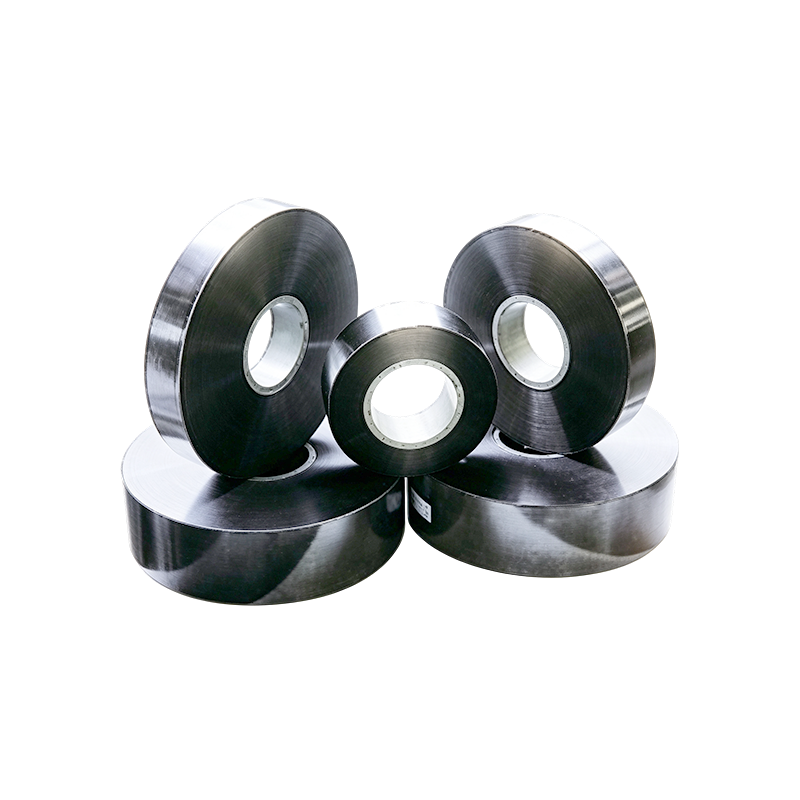
The dielectric is metallized polypropylene film, which is self-healing: a local breakdown clears a small area of metallization instead of shorting the element. That behaviour is also why capacitance decays slowly rather than failing at once, and why a capacitor that looks perfect can measure well below nominal after years in a hot housing. We coat the aluminum-metallized polypropylene film in-house at a controlled sheet resistance, because clearing behaviour and voltage withstand both depend on it.
100 °C and 110 °C Classes Are Not Interchangeable
The temperature class is a qualification limit, not a marketing tier: a 110 °C lighting capacitor uses a film and impregnant system qualified for a hotter ballast compartment than a 100 °C part, and swapping one for the other shortens life even when the microfarads are identical.
Closed floodlight and high-bay housings commonly reach 80 to 95 °C on the ballast bracket after a few hours of running, with short excursions above that on hot restrike. Film capacitors age at roughly double the rate for every additional 10 °C, so a part running 10 °C above its class does not degrade slightly faster, it degrades about twice as fast.
The table below is the short version of how the families differ before you open a catalogue.
| Family | Case and form | Temperature class | Selection focus |
| HID lamp capacitor | Cylinder, aluminium case | 110 °C | Capacitance stability in a hot ballast compartment |
| Metal halide lamp capacitor | Oval or cylinder, aluminium case | 100 °C | Fitting the can into a compact head |
| Lighting compensation, class A | Cylinder, aluminium case | Standard class | Continuous mains duty in ventilated enclosures |
| Lighting compensation, class B | Aluminium case, mechanical anti-explosion | Standard class | Containment when the element reaches end of life |
HID and Metal Halide Lamp Capacitors
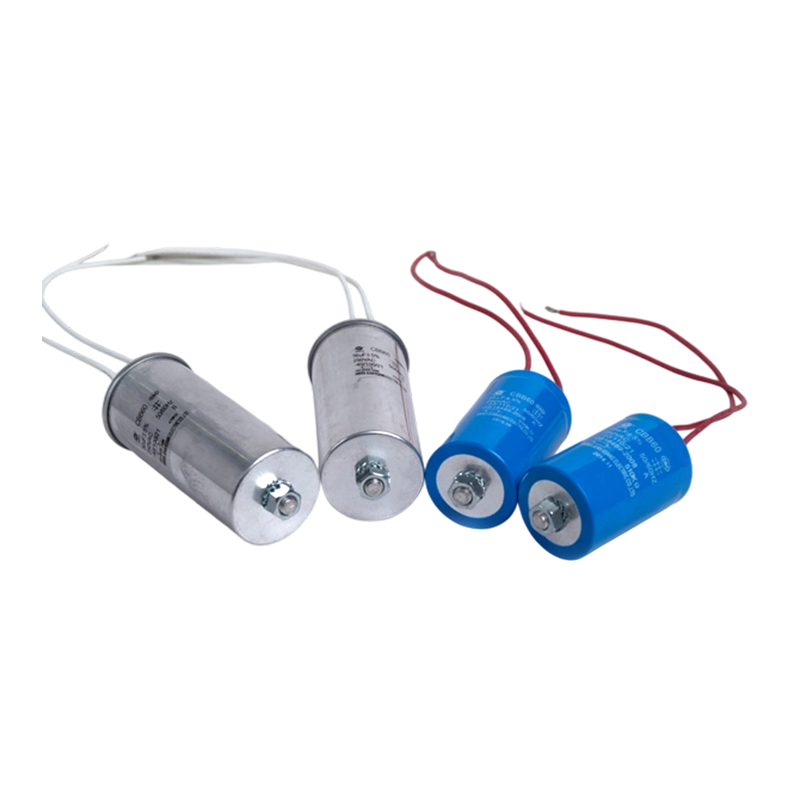
HID and metal halide fixtures share the same correction principle but usually need different hardware: HID heads normally take a 110 °C cylindrical aluminium can, while compact metal halide heads often need a 100 °C oval can to sit beside the ballast.
- Capacitance matched to the ballast rated lamp wattage and ballast type, not copied from whatever sample was on the bench.
- 110 °C class for HID heads where the can sits next to the ballast core and the housing traps heat.
- 100 °C class for metal halide heads with more air volume and shorter duty cycles.
- Cylindrical aluminium case for standard HID mounting brackets and stacked ignition assemblies.
- Terminal type and lead length matched to the existing harness so a replacement does not need re-termination.
- Better heat spreading around the element
- Standard clip and bracket fit on most HID heads
- Taller stack height inside the housing
- Common choice for 110 °C designs
- Lower profile for tight metal halide heads
- Typical of 100 °C designs
- Needs the correct oval clip spacing
- Lead exit direction affects routing
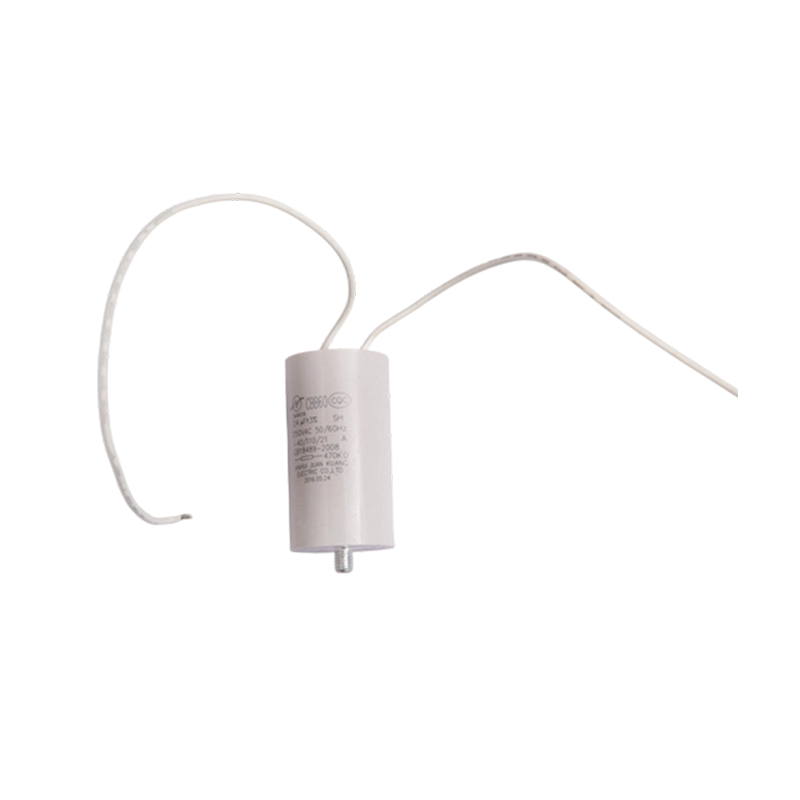
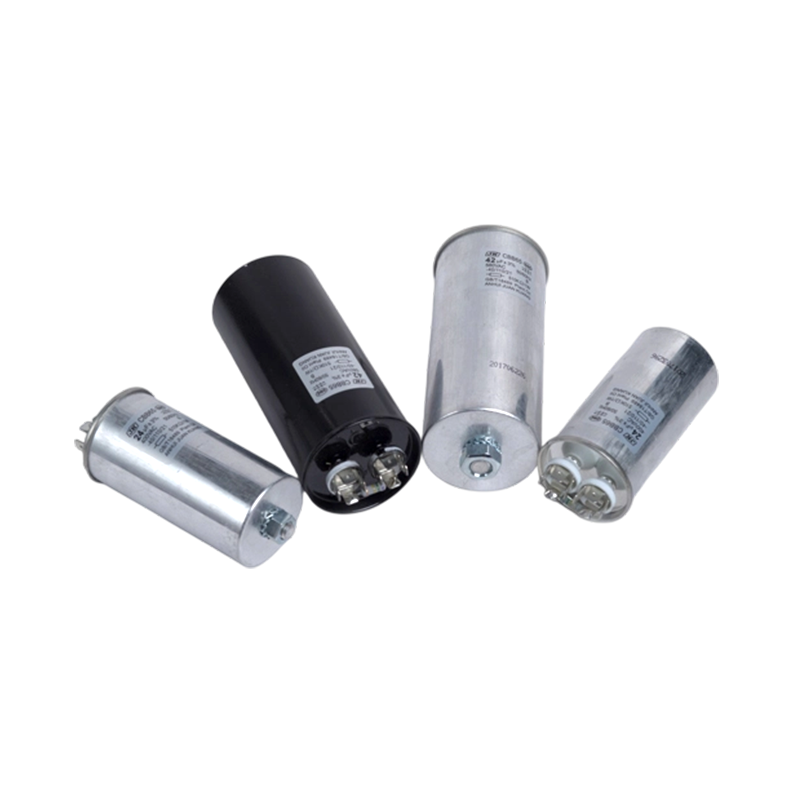 CBB65 HID Lighting Capacitors, 110°C Cylinder CaseFor HID fixtures needing a 110°C cylindrical aluminum can, this series covers 8–69 μF and 240–540 VAC with self-healing film construction.View Product →
Compensation Capacitors and the Class A versus Class B Split
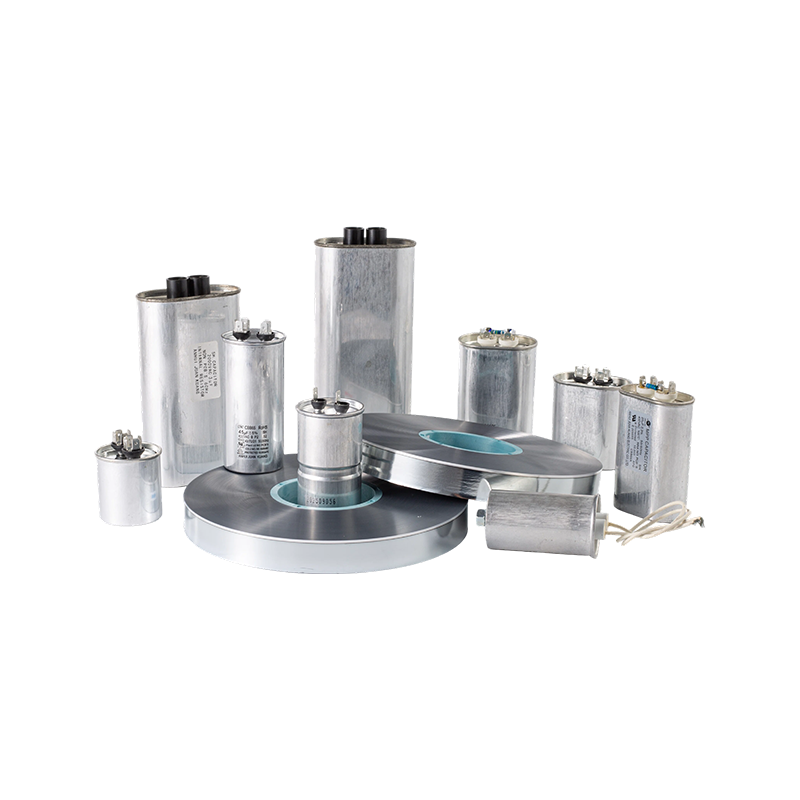
Lighting compensation capacitors work at luminaire-group or panel level rather than inside a single ballast loop, and the class A versus class B choice is about failure containment: a class B part adds a mechanical anti-explosion case so an end-of-life failure vents instead of rupturing the can.
Class A aluminium-case capacitors are the default for ventilated enclosures, group compensation and retrofit work where the part is accessible and the environment is moderate. Class B mechanical anti-explosion parts are specified where the capacitor sits in a sealed panel, close to people, or anywhere a ruptured can would count as a safety event rather than a service call.
Both classes are sized the same way: reactive power to be compensated, system voltage, harmonic environment, and the switching duty the bank will actually see.
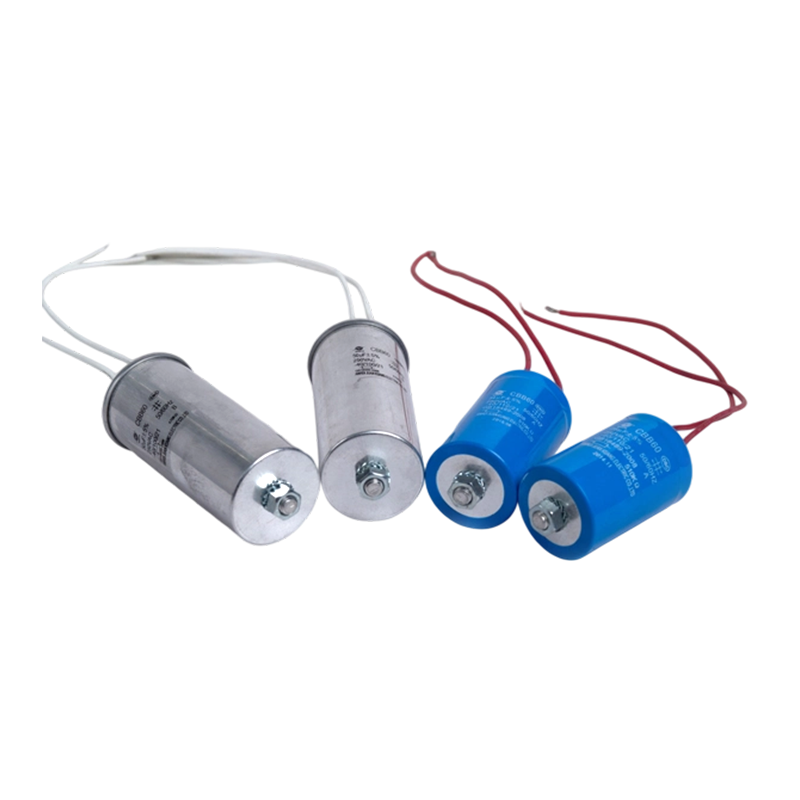 Class B Lighting Compensation Capacitor, Aluminum CaseAdds mechanical anti-explosion containment for HPS and mercury-arc lamp compensation, with 250/330 VAC ratings and capacitance options from 8 to 100 μF.View Product →
Sizing: Microfarads, Voltage and Can Dimensions
Sizing a lighting capacitor comes down to four numbers: capacitance to match the ballast, AC voltage rating with margin for sustained overvoltage, temperature class, and the can dimensions the fixture can physically accept.
- Capacitance: read it from the ballast datasheet and hold a 5 percent tolerance. A part sitting 5 percent low shifts lamp current and makes ignition marginal on cold starts.
- Voltage rating: 250, 280, 300, 400 and 450 V AC are the common steps. Choose the rating above the highest sustained RMS the fixture will see, including tapped mains and long-line conditions.
- Temperature class: taken from measured ambient inside the housing, not from the previous supplier drawing.
- Geometry: diameter, height, oval clip spacing, terminal orientation and lead length all decide whether the part fits at all.
- Case material: aluminium for heat spreading and mechanical strength, plastic where isolation from the bracket matters more.
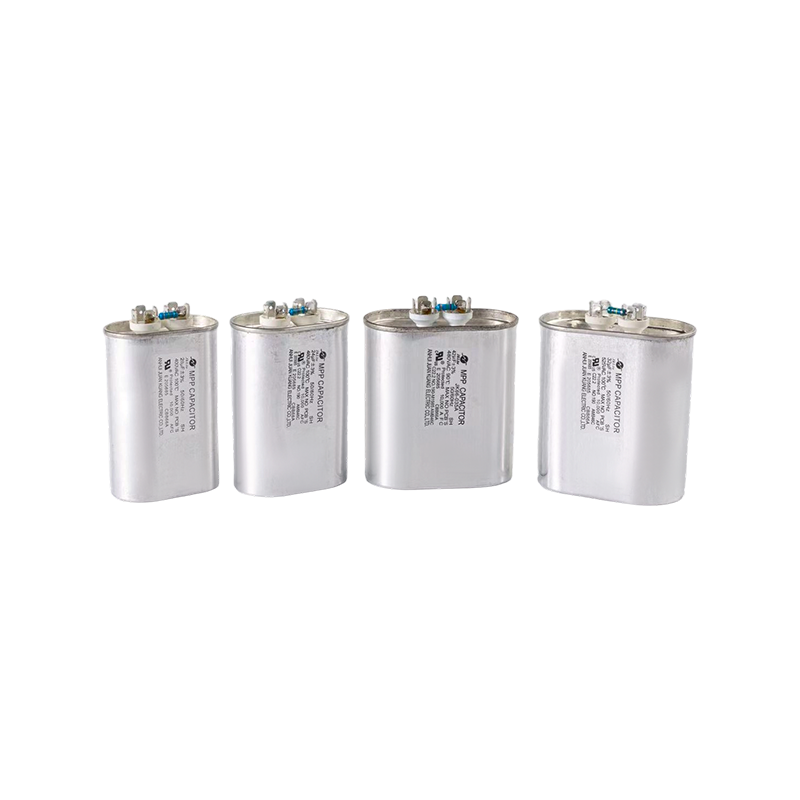 CBB66A Metal Halide Lighting Capacitor, Oval CaseFor metal halide fixtures using CWA ballasts, this 100°C oval-case capacitor offers 1.5–80 μF options and dual-section values up to 80+7.5 μF.View Product →
Failure Modes You Will Actually See
Most lighting capacitor failures show up as capacitance loss long before they show up as a bulge, which is why a fixture that still lights can already be drawing too much line current.
- Capacitance drift. Film shrinkage and loss of contact pressure pull the value down. Lamp current rises, ignition gets unreliable, and the ballast runs hotter.
- Insulation resistance drop. Leakage current heats the element from the inside; the case discolours before it swells.
- Case swelling or oil weep. Overpressure at end of life. Take the fixture out of service rather than topping up the oil.
- Loss angle rise. Higher internal losses mean higher core temperature, which accelerates ageing and feeds the failure.
A Sourcing Checklist for Lighting Capacitors
A complete lighting capacitor specification fits on one page: capacitance and tolerance, AC voltage rating, temperature class, case geometry and material, termination, and the standard the part is tested against.
- Fix the electrical target first: microfarads, tolerance and AC voltage, taken from the ballast data rather than from a competitor sample.
- Set the temperature class from a measured compartment temperature, with at least one class of headroom for hot restrike.
- Choose geometry and case material against a drawing of the housing, including clip spacing and lead routing.
- Confirm the test standard, the capacitance and loss-angle limits, and the voltage proof level in writing before tooling starts.
- Qualify a production batch, not a golden sample: capacitance spread across the batch tells you more about process control than any single measurement.
For a slower walk through the same decisions, our lighting capacitor selection guide compares HID, metal halide and compensation parts side by side.
Frequently Asked Questions
What happens if a 100 °C capacitor goes into a 110 °C HID fixture?
It works at first and then ages roughly twice as fast for every 10 °C it runs above its class. Expect capacitance drift, harder ignition and a shorter replacement interval rather than an immediate failure.
Does a higher voltage rating always last longer?
Not automatically. A higher AC rating gives more margin against transients and sustained overvoltage, but a part with a larger case for the same microfarads may not fit, and the temperature class still governs life more than the voltage margin does.
How do I choose between class A and class B compensation?
Choose class A for ventilated, accessible enclosures. Choose class B, with the mechanical anti-explosion case, wherever the capacitor sits in a sealed panel or close to people and a ruptured can would be a safety event.
Can I replace a capacitor with a different can shape?
Yes, provided capacitance, tolerance, AC voltage and temperature class stay the same or improve, and the new can fits the clip spacing and lead routing. Changing the shape changes heat spreading, so re-check the compartment temperature afterwards.