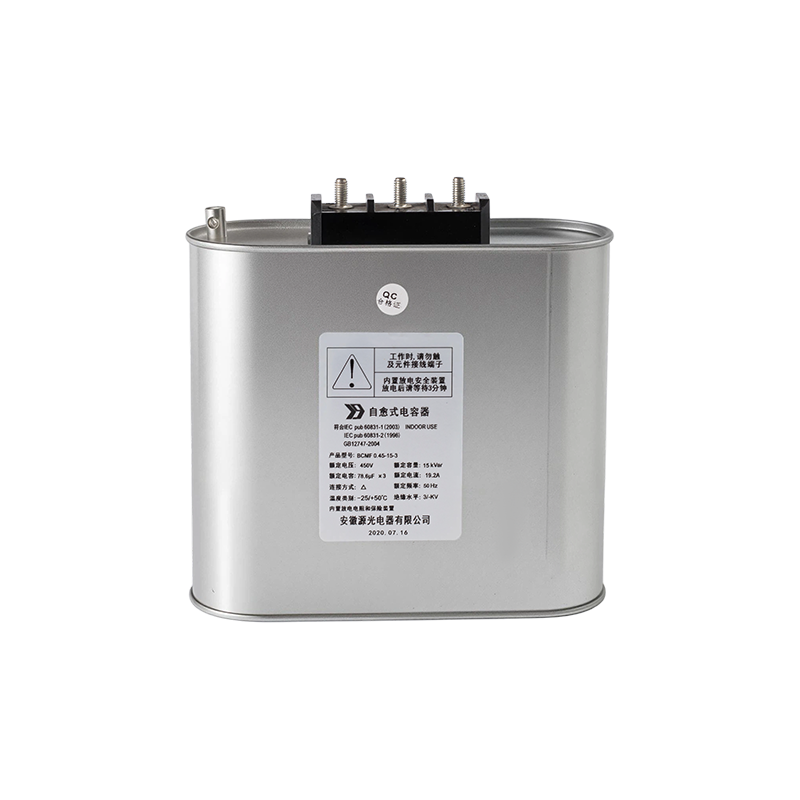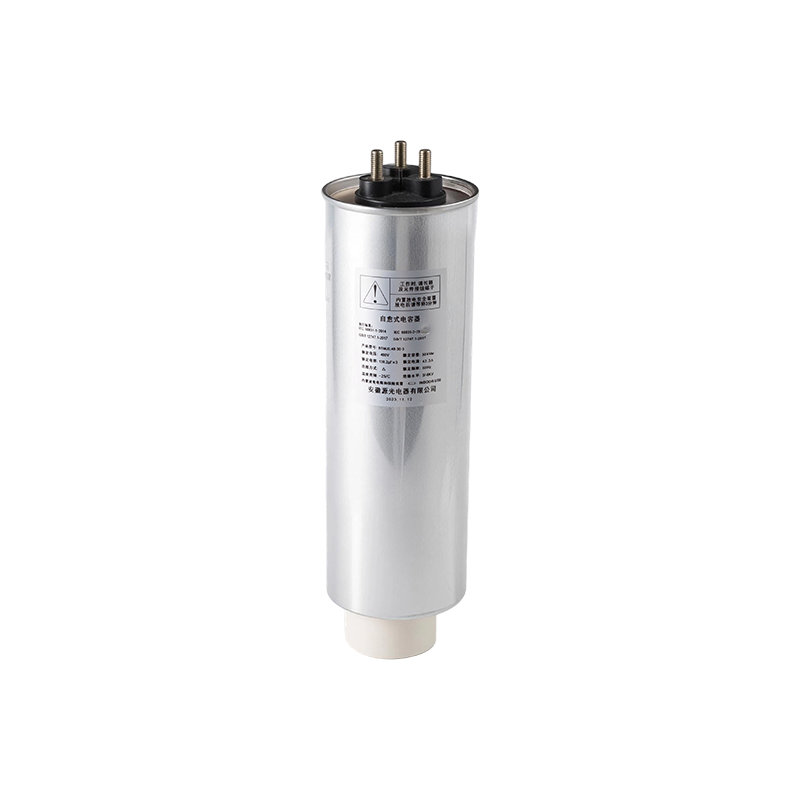
 English
 中文简体
 Français
 русский
 Español
 عربى
Content
A capacitor that tests clean on the bench can still fail in the field a year later, and the root cause is usually a decision made months before assembly: how thick the polypropylene film was, how much zinc went into the metallization, and how much voltage margin the design was allowed to keep.
Metallized film capacitors sit inside air conditioners, HID ballasts, microwave ovens, PFC stages and DC-link assemblies, and they are one of the few passive components where the material and the finished device come out of the same process. That matters for buyers, because two parts carrying the same 4.7 uF and 450 V on the label can behave very differently at 60 degrees C and full ripple current.
What metallized film capacitors actually are
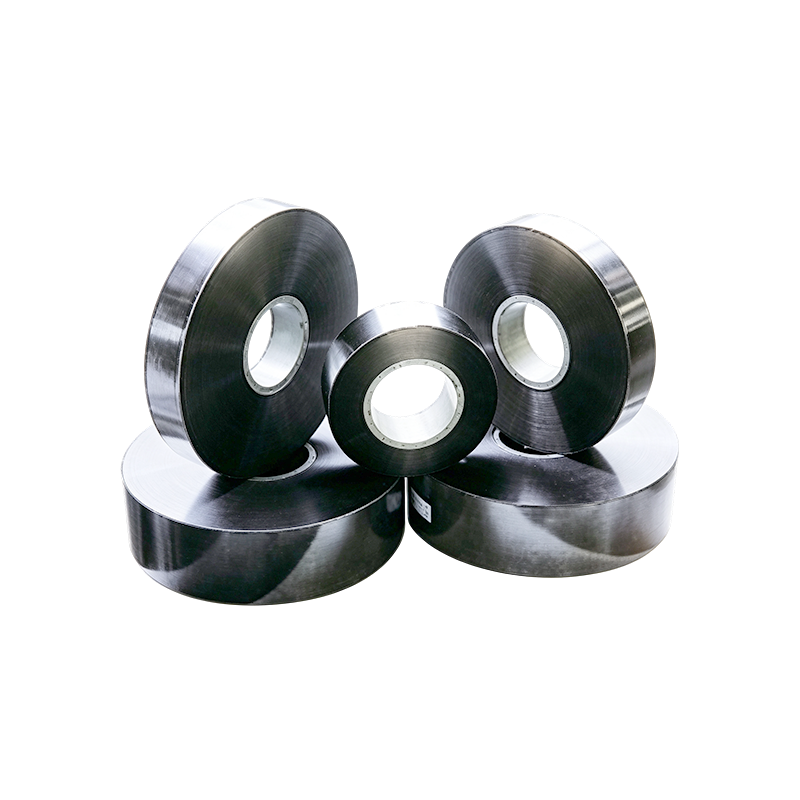
A metallized film capacitor is a capacitor whose dielectric is a plastic film, usually polypropylene, coated on one or both surfaces with a vacuum-deposited metal layer around 10 to 50 nanometres thick, and that thin metal layer is the electrode itself.
Definition: a metallized film capacitor stores energy in a polymer film and uses a deposited metal layer as its electrode, so a local dielectric breakdown burns away the metal around the fault and the part keeps working with a small permanent loss of capacitance. That behaviour is called self-healing.
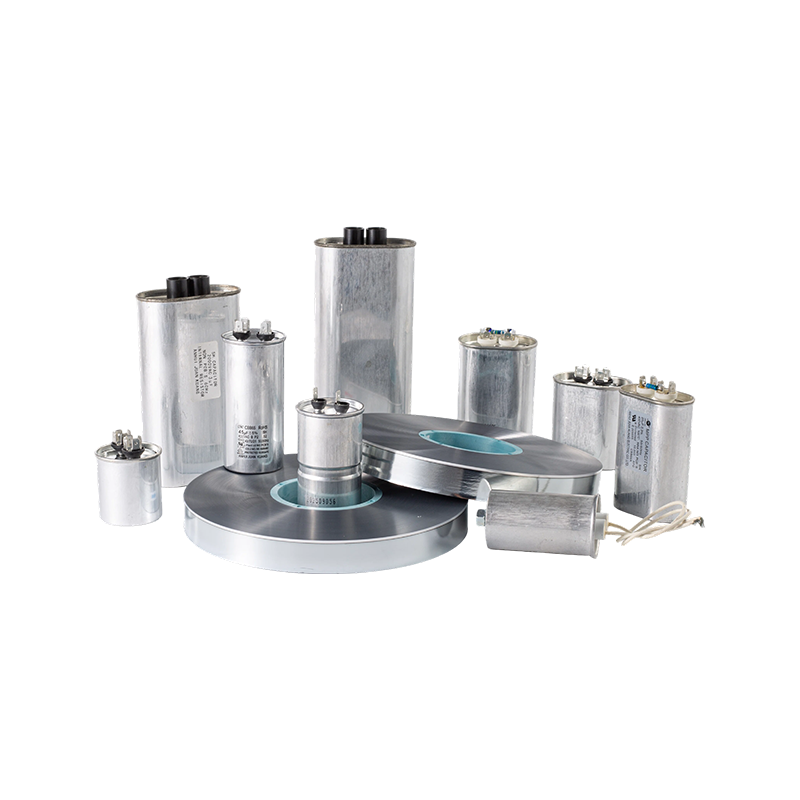
Construction follows a fixed sequence. Base film 3 to 12 micrometres thick is metallized under vacuum, slit to width, wound or stacked, then end-sprayed with zinc or a zinc alloy so both electrodes can be terminated. The wound element goes into an aluminium, plastic or stainless steel case, dry or oil-filled, with terminals suited to PCB mounting or screw connection.
Compared with film-foil designs, where a separate aluminium foil carries the current, metallized parts trade some surge capability for self-healing and a much smaller volume per microfarad. In practice, the variables that define a part are:
- film grade and film thickness
- metallization pattern, layer thickness and surface resistivity
- margin width and segment design
- winding tension and end-spray quality
- case material and impregnant
Film and metallization choices that drive performance
The dielectric film and the metallization pattern move performance more than any other two decisions: polypropylene gives low loss and stable capacitance, while a segmented aluminium-zinc layer buys self-healing energy at the cost of a slightly higher equivalent series resistance.
| Parameter | Typical range | What it changes |
| Film thickness | 3 to 12 micrometres | Breakdown strength, energy density, clearing energy |
| Metal layer | 10 to 50 nanometres | Current handling versus self-healing behaviour |
| Surface resistivity | 1 to 20 ohm per square | Clearing energy, ESR, pulse capability |
| Dissipation factor at 1 kHz | 0.0002 to 0.001 | Self-heating under AC and ripple current |
| Capacitance tolerance | +/-5% to +/-10% | Design margin in motor run and filter circuits |
| Lighting grade limit | up to 110 degrees C | Life inside HID and metal halide luminaires |
Aluminium versus aluminium-zinc metallization
Aluminium metallization
- Single aluminium layer with one-stage clearing
- Better stability under humidity and DC stress
- Common in DC filter and general purpose parts
- Slightly higher clearing energy per event
Aluminium-zinc metallization
- Zinc-rich top layer clears at lower energy
- Stronger choice for AC, motor run and high ripple duty
- Supports segmented patterns for higher voltage
- Needs tighter humidity control in coating and storage
Because the electrode is only nanometres thick, the metallization is where a design is won or lost: a 30 nm layer can clear a fault in microseconds, and the same layer corrodes just as quickly if moisture reaches the film edge.
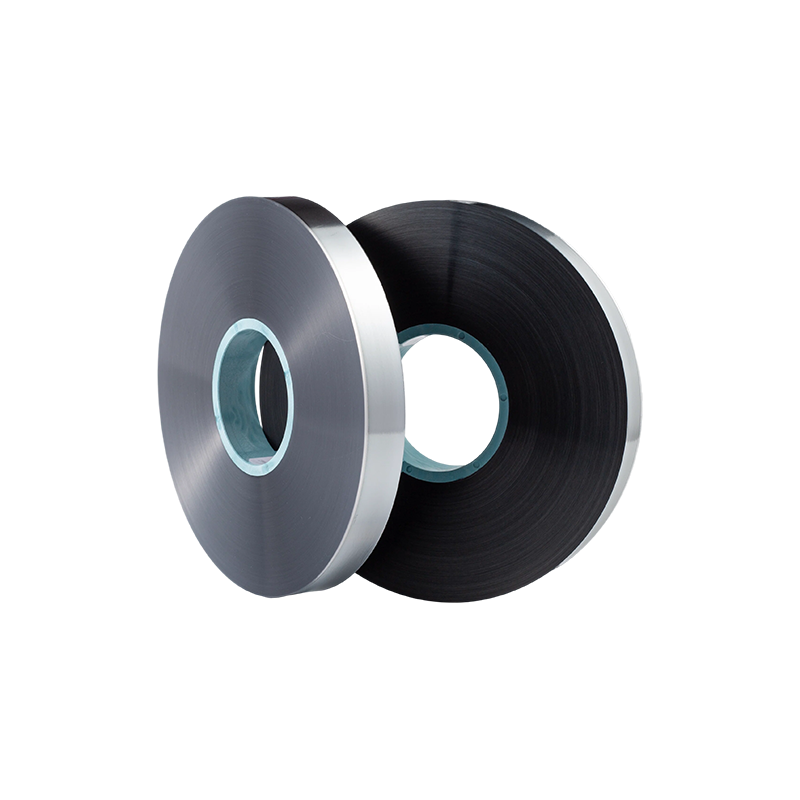 Al-Zn Metallized Polypropylene Capacitor FilmsCapacitor-grade MPPA and MPPAZ metallized polypropylene films for film capacitor production, available in multiple base-film thicknesses and slit widths.View Product →
Self-healing, ESR and the failure modes that matter
Self-healing keeps a metallized film capacitor alive after a breakdown, but every clearing event removes a small area of electrode, so capacitance falls slowly across life while ESR tends to rise faster than capacitance falls.
Knowing the mechanism makes field returns easier to read. The failure patterns below account for most of the real-world cases in motor, lighting and power electronic applications:
- Capacitance drift from cumulative clearing, most visible in high-ripple DC-link duty
- ESR rise that converts ripple current into heat and can end in thermal runaway
- End-connection fatigue when dv/dt is high, typical of pulse and snubber parts
- Metal corrosion where moisture reaches the film edge, faster on zinc-rich metallization
- Case and impregnant limits that set the real operating temperature, not the datasheet headline figure
Derating is the cheapest reliability lever available. Running a 450 V rated part at 250 to 300 V in a DC-link, or an AC motor capacitor at roughly 80 percent of its rated voltage, usually extends life far more than moving up to a larger can.
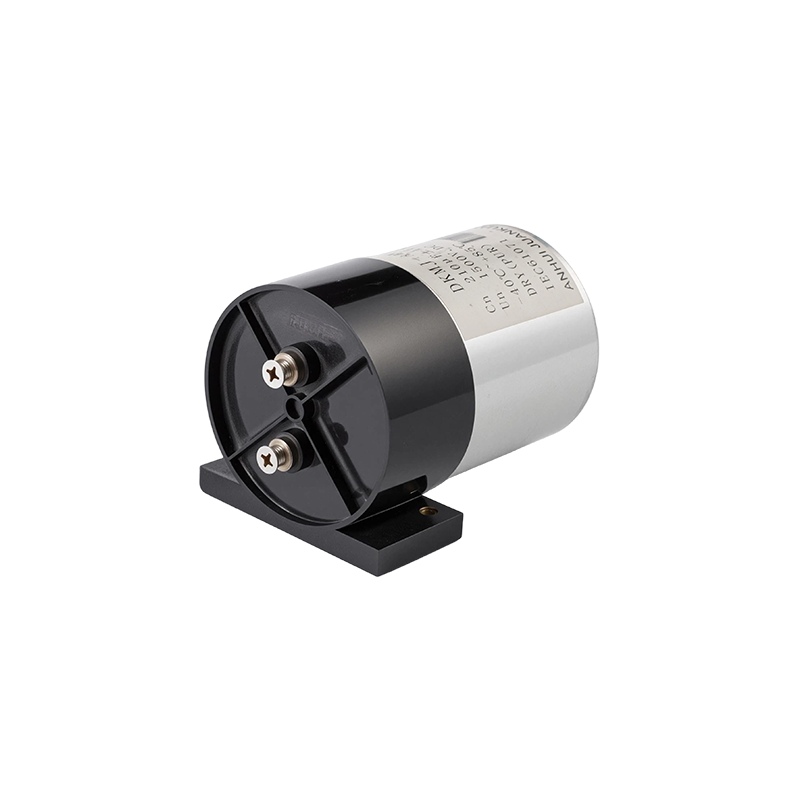 Aluminium Case Dry DC-Link Film CapacitorsAluminium-case film DC-link capacitors with low ESR, high ripple-current capability and self-healing, rated 600–4000 Vdc for inverter, EV/HEV and welding uses.View Product →
Where metallized film capacitors are used
Metallized film capacitors appear wherever an AC motor, a lamp ballast or a switching converter needs a stable, low-loss energy buffer, and the case shape and housing material are chosen for the mechanical environment rather than for the electrical function.
Motor run and start
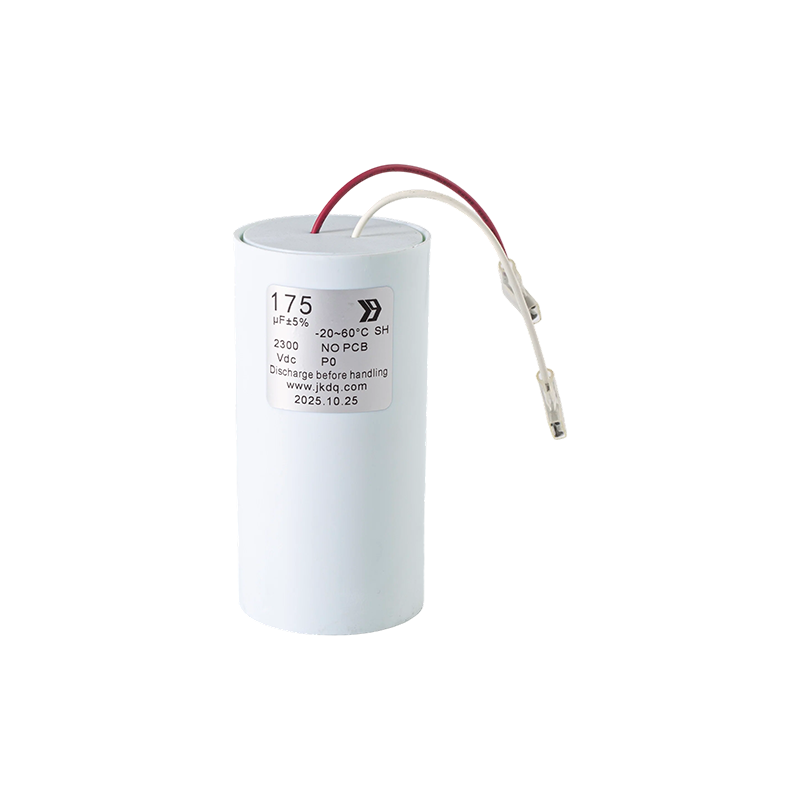
CBB60, CBB61 and CBB65 parts in aluminium, plastic or stainless steel cases for air conditioners, fans, refrigerators and washing machines.
Lighting
Compensation and HID grades rated at 100 and 110 degrees C, supplied in cylinder or oval aluminium cases.
Microwave ovens
CH85 high-voltage capacitors for the magnetron supply, where voltage withstand matters more than capacitance accuracy.
DC-link
Dry aluminium case and stainless steel case parts for inverters, automotive DC filtering and general power conversion.
PFC and shunt
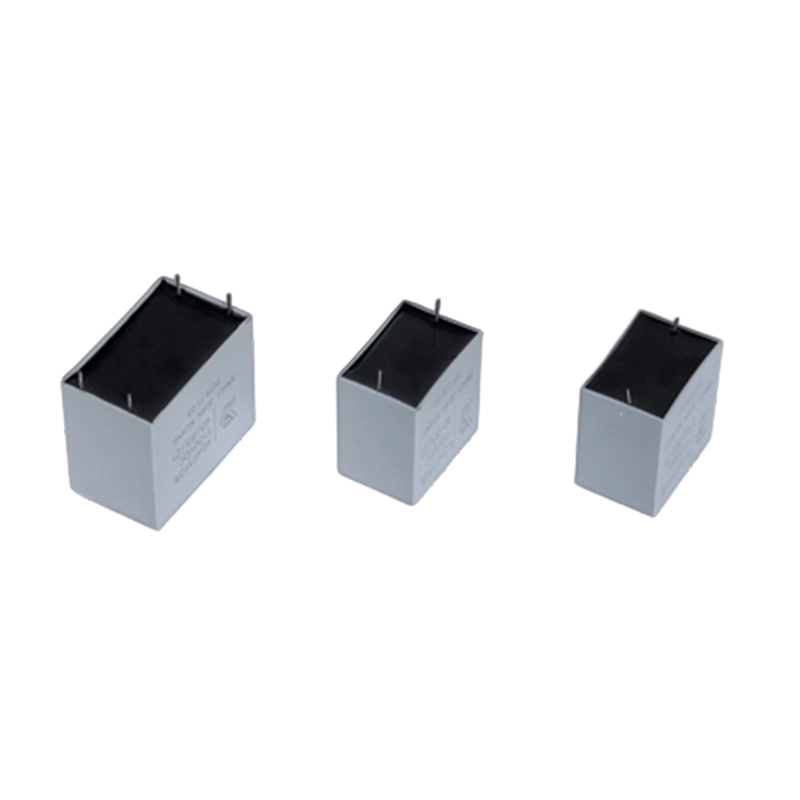
Cylinder and three-phase square low-voltage power capacitors for power factor correction and reactive compensation.
Pulse and snubber
IGBT snubber and metallized polypropylene pulse capacitors built for high dv/dt and repetitive peak current.
Lighting is the segment where temperature dominates. A ballast capacitor that runs at 100 to 110 degrees C for 30,000 hours sees more dielectric stress than a motor capacitor at 70 degrees C, which is why HID and metal halide grades are specified with an explicit temperature class and case geometry instead of capacitance alone.
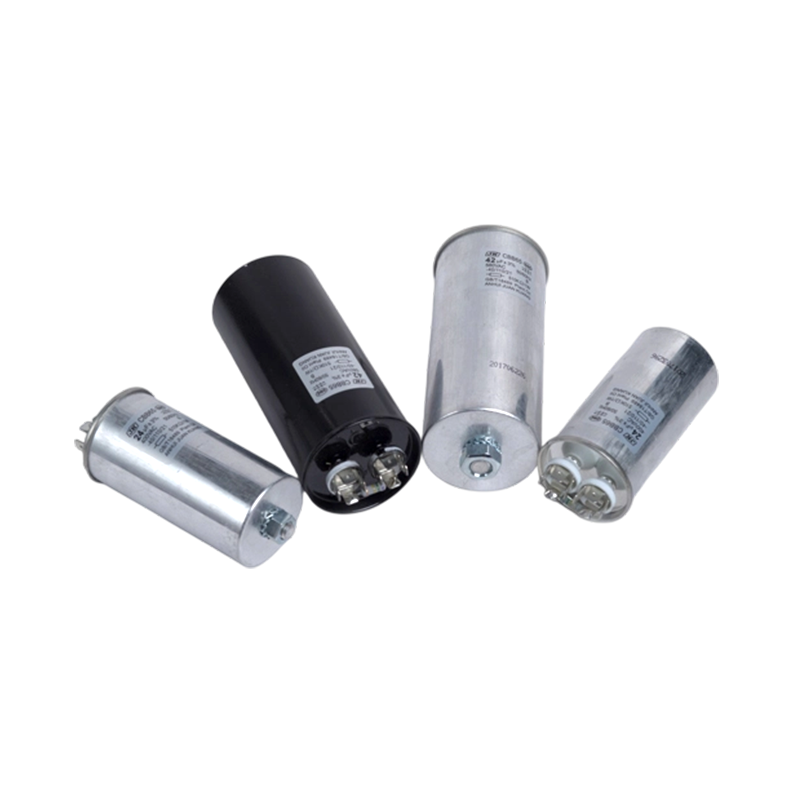 CBB65 HID Lighting Capacitors, 110°C Cylinder CaseMetallized film AC capacitors for HID lighting with a cylindrical aluminium case, 110°C rating and self-healing, low-loss performance for ballast use.View Product →
In power electronics the duty is electrical rather than thermal: DC-link, filter and snubber parts are selected on ripple current, dv/dt and expected hotspot temperature, and the same capacitance in a different case can carry a very different current.
A specification checklist that survives volume production
A usable specification fixes six things at once: capacitance and tolerance at a stated frequency and temperature, rated AC or DC voltage, ripple current, dv/dt limit, expected life at a stated hotspot temperature, and the mechanical envelope.
- Define the electrical duty: AC or DC, fundamental frequency, ripple amplitude, peak voltage and dv/dt limit.
- Choose dielectric and metallization: polypropylene for low loss, polyester for higher temperature, aluminium or aluminium-zinc for the AC and DC cases.
- Set derating and thermal margin: voltage margin plus the real hotspot temperature inside the enclosure, not the room ambient.
- Fix the mechanical envelope: case type, terminal spacing, PCB footprint and mounting orientation.
- Qualify before release: capacitance, dissipation factor, insulation resistance and a withstand screen on every batch.
Film quality is decided upstream. When metallizing, slitting and winding run under one roof, as they do on our metallizing and winding lines, batch-to-batch variation in surface resistivity is easier to hold inside a narrow window, and that window is what keeps capacitance drift predictable over a ten-year service life.
For custom ratings, non-standard case sizes or application support on motor, lighting and DC-link parts, an engineering and process capability review is usually the fastest way to confirm what is buildable before drawings are frozen.
Ask for the dissipation factor at the frequency the part actually sees. A value quoted at 1 kHz looks excellent on a 50 Hz motor capacitor datasheet and says very little about behaviour at 20 kHz ripple.
Frequently asked questions
What is the difference between metallized film and film-foil capacitors?
A film-foil capacitor uses a separate aluminium foil as the electrode, while a metallized part deposits the electrode directly onto the film. Metallized parts self-heal after a breakdown and pack more capacitance into less volume; film-foil parts handle higher peak currents and suit duties where surge current is the dominant stress.
Do metallized film capacitors fail open or short?
Most end-of-life failures trend toward gradual capacitance loss and a slow rise in ESR. A hard short is unusual in a well designed part because each breakdown clears locally, but severe overvoltage or a damaged end connection can still produce a short or an open circuit.
How long do metallized film capacitors last?
Life depends mainly on hotspot temperature and voltage stress. Polypropylene parts are commonly rated for 10,000 to 100,000 hours at rated conditions, and every 8 to 10 degrees C reduction in hotspot temperature roughly doubles the expected life.
Can metallized film capacitors be used in DC-link circuits?
Yes, DC-link is one of the largest application groups. Dry aluminium case and stainless steel case designs are selected for low ESL, high ripple current capability and capacitance that stays stable across the inverter's service life.
Incoming inspection is where most sourcing risk is caught: capacitance and dissipation factor at the operating frequency, insulation resistance after humidity storage, and a withstand test on every lot. A supplier that can share those numbers alongside the film specification is telling you how the part will behave in year eight, not just on the day it ships.